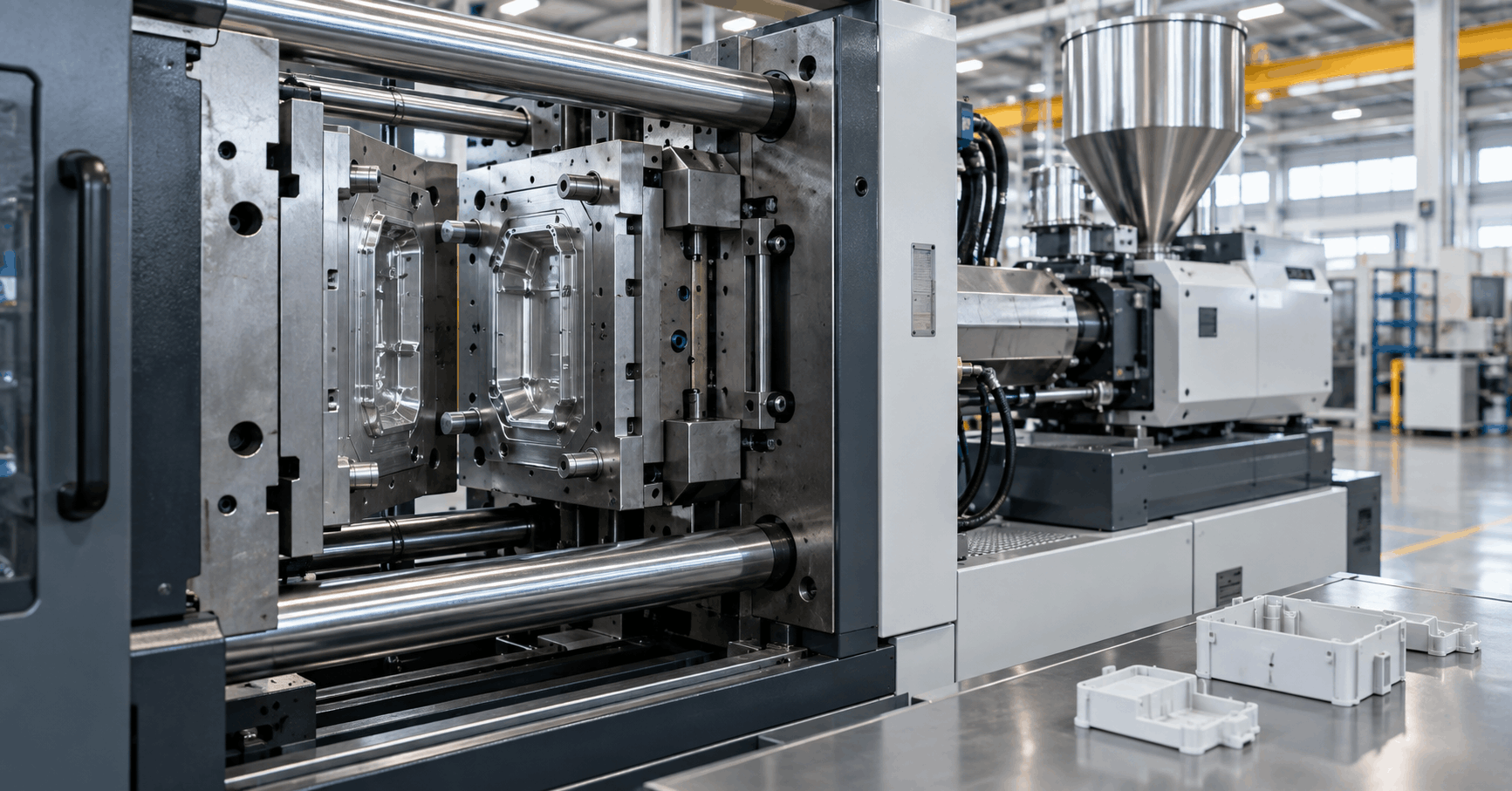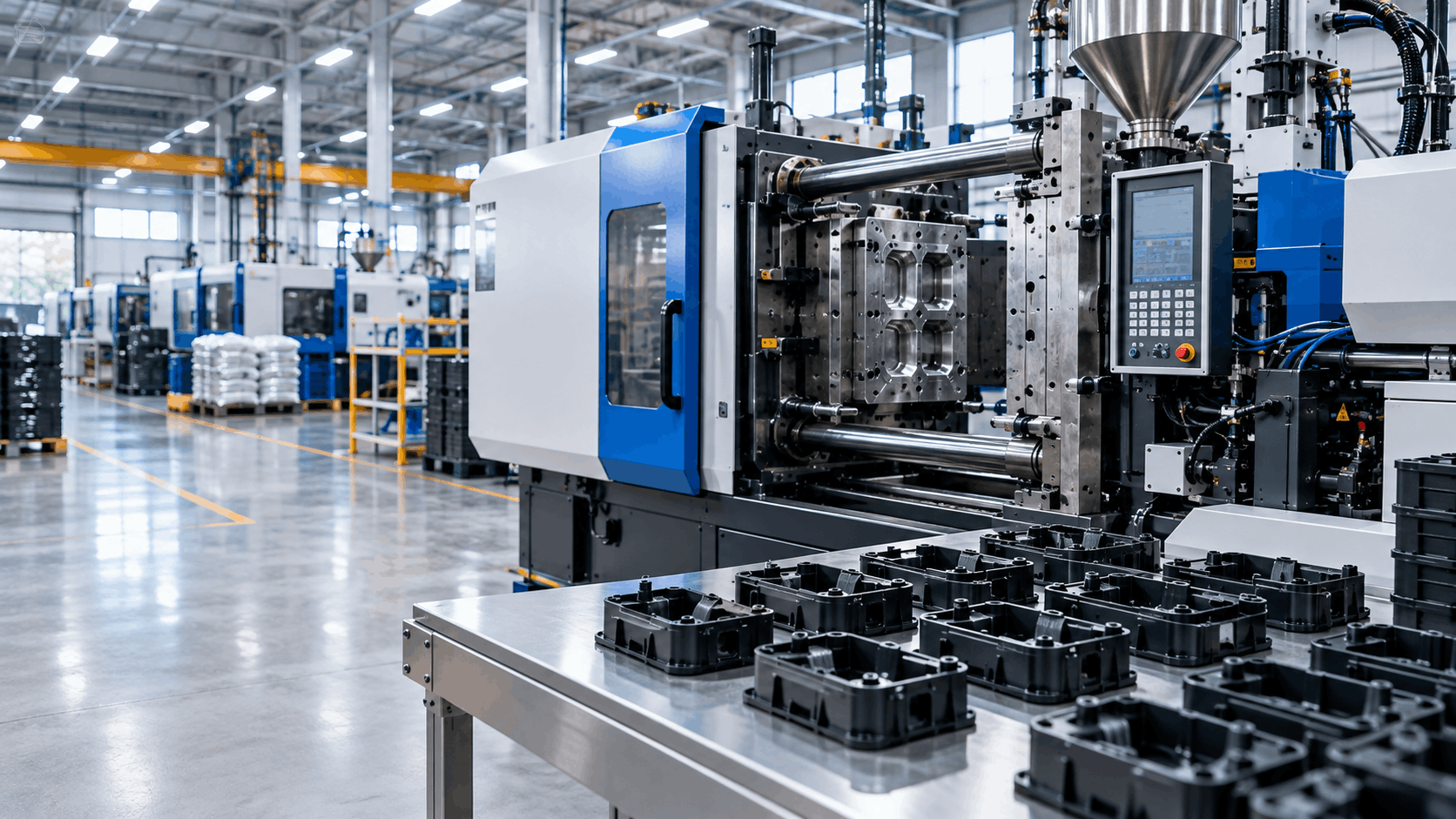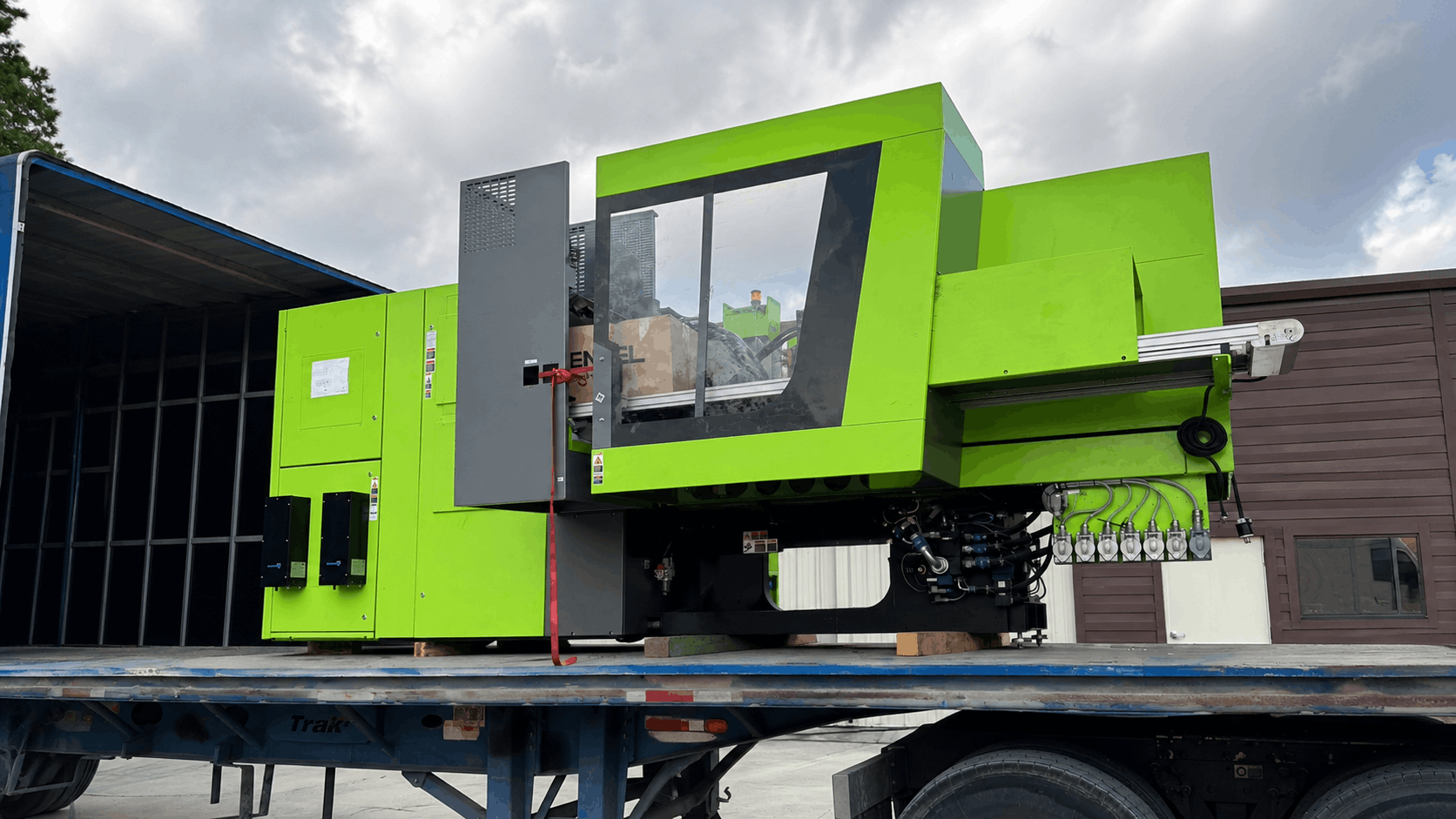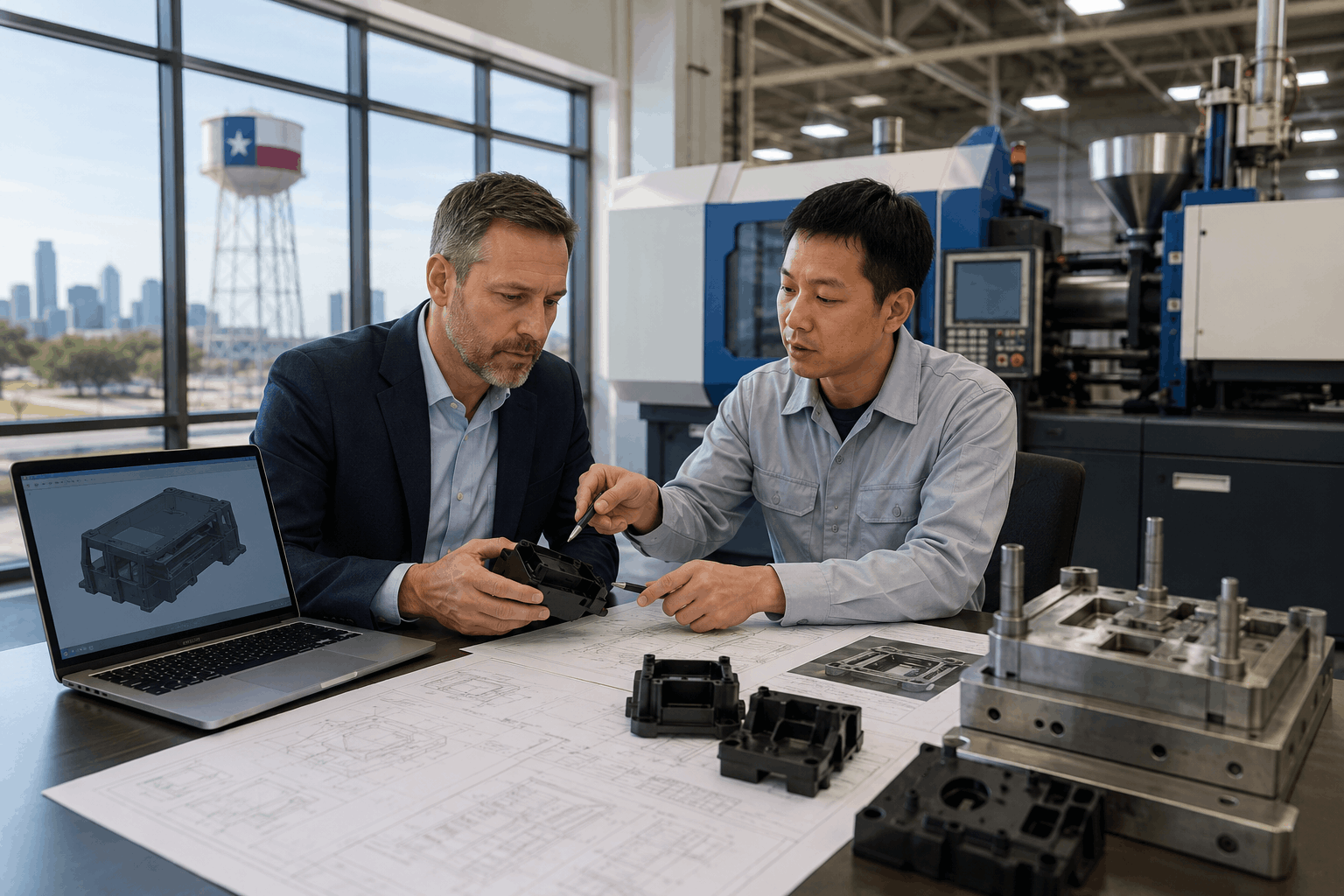
Choosing an injection molding company is not simply a matter of collecting three quotes and selecting the lowest price. The right manufacturer should have engineering, tooling, material, equipment, quality, production, and supply-chain capabilities that match the specific needs of your product.
For an engineer, that may mean getting useful DFM feedback before the mold is built. For a procurement manager, it may mean understanding what is included in tooling and piece-price quotations. For an OEM, the bigger concern may be whether the supplier can maintain quality and delivery performance as annual demand increases.
The goal is therefore not to find the injection molding company that sounds the most impressive. It is to identify the company whose capabilities, processes, commercial structure, and production model fit your particular project.
This 12-point buyer checklist shows what to evaluate before approving tooling or issuing a production purchase order.
Quick Answer: What Should You Look for in an Injection Molding Company?
A strong injection molding supplier should be able to demonstrate relevant DFM and engineering support, tooling expertise, suitable molding equipment, material knowledge, documented quality processes, production capacity, realistic lead-time planning, secondary operations where needed, transparent pricing, effective project communication, and dependable logistics support.
Use this quick checklist during your initial supplier review:
- DFM and engineering support
- Injection mold tooling capability
- Suitable machine and production capacity
- Material and resin expertise
- Quality-control processes
- Prototype-to-production support
- Realistic lead-time planning
- Secondary manufacturing capabilities
- Transparent total project cost
- Appropriate domestic or overseas manufacturing strategy
- Clear communication and project management
- Logistics and long-term supply support
No supplier needs to be the largest manufacturer or have every conceivable capability. What matters is whether its actual capabilities align with your component, resin, tolerances, annual demand, quality requirements, launch schedule, and supply-chain objectives.
1. Start With Your Own Injection Molding Project Requirements
Before asking which injection molding company is right for your project, define what the project actually requires.
A supplier cannot meaningfully evaluate tooling, machine requirements, cycle strategy, material behavior, inspection, or production capacity from a photograph and a rough description alone. Better input normally produces a more useful technical review and a more comparable quotation.
Ideally, prepare a quote-ready RFQ package before approaching manufacturers.
Prepare a Quote-Ready RFQ Package
Your RFQ should identify the information that materially affects manufacturing.
| Requirement | What to Provide | Why It Matters |
|---|---|---|
| Part geometry | 3D CAD model | Allows moldability, tooling, and machine-fit review |
| Critical dimensions | 2D drawing | Identifies tolerances and inspection requirements |
| Material | Resin family and grade where known | Affects shrinkage, processing, performance, and tooling |
| Color | Standard or custom requirement | Influences resin preparation and production |
| Surface finish | Texture, polish, cosmetic requirements | Affects tooling and appearance expectations |
| Production volume | Initial quantity and annual demand | Influences tool construction, cavities, and capacity planning |
| Program life | Estimated lifetime demand | Helps determine an appropriate tooling strategy |
| Quality needs | Critical dimensions and documentation | Determines inspection and process-control requirements |
| Secondary operations | Assembly, printing, welding, inserts, etc. | Changes the finished-part manufacturing scope |
| Packaging | Bulk, individual, protective, or custom | Influences handling and total delivered cost |
| Destination | Final delivery location | Helps evaluate logistics and landed cost |
| Launch target | Required approval and production dates | Helps establish a realistic project schedule |
Do not be concerned if every specification is not final. Early-stage projects naturally have open questions. What matters is clearly separating confirmed requirements from assumptions.
Separate Must-Have Requirements From Preferences
This is particularly useful when comparing injection molding companies.
A functional interface dimension may be a must-have. A preferred carton configuration may be negotiable. A specified flame-retardant resin could be essential to one application, while another project may allow the manufacturer to recommend several suitable materials.
Clearly identifying the difference gives engineers room to optimize manufacturing without compromising product requirements.
It also helps prevent an expensive problem later: discovering that different suppliers quoted different interpretations of the project.
2. Evaluate DFM and Engineering Support Before Tooling Begins
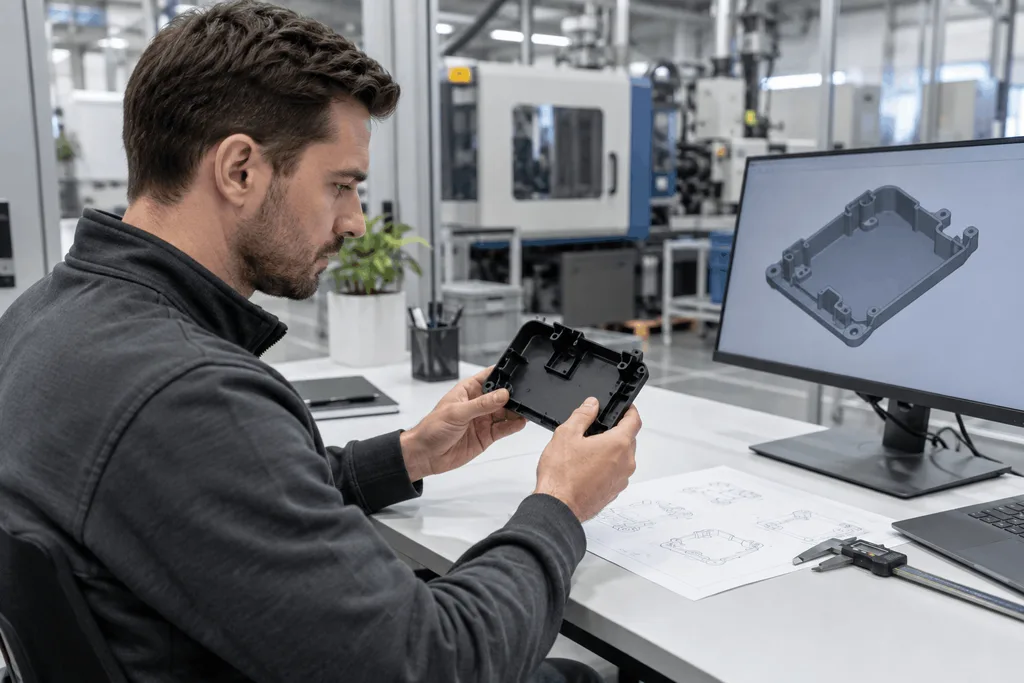
Design for Manufacturability, commonly called DFM, is one of the first areas to evaluate when choosing an injection molding company.
A useful DFM review does more than confirm that a part can physically be molded. It examines whether the geometry, material, mold strategy, and production requirements are likely to work together reliably.
Injection molding design considerations commonly include wall thickness, draft, ribs, bosses, radii, undercuts, gates, parting lines, ejector locations, sink risk, weld lines, warpage, and dimensional requirements.
For additional technical background, Protolabs provides a useful plastic injection molding DFM resource. plastic injection molding DFM resource
What Should a Useful DFM Review Cover?
The exact review depends on the component, but the supplier should be able to explain issues that could affect molding rather than simply marking the design as approved.
For example, excessively thick areas may influence cooling and sink. Insufficient draft can make ejection more difficult. An undercut may require a slide, lifter, insert, or geometry change. A tight tolerance may be technically achievable but unnecessary for product function.
A good discussion does not automatically mean changing the customer’s design. It means understanding the manufacturing consequences before money is committed to tooling.
This is also where early supplier involvement can be valuable.
Changing a CAD model is usually easier than correcting a production mold after machining has begun.
Haumann’s tooling engineering and mold fabrication capabilities are structured around this DFM-to-tooling relationship. tooling engineering and mold fabrication
Look for Engineering Explanations, Not Automatic Approval
A useful technical response might explain why a feature creates risk and present possible options.
A weak response is simply:
“Everything looks fine.”
A stronger response identifies which features deserve attention, what may happen if they remain unchanged, and whether the concern affects quality, tooling complexity, cycle time, cost, or manufacturability.
That level of communication becomes especially important when a product is moving from prototype geometry into production tooling.
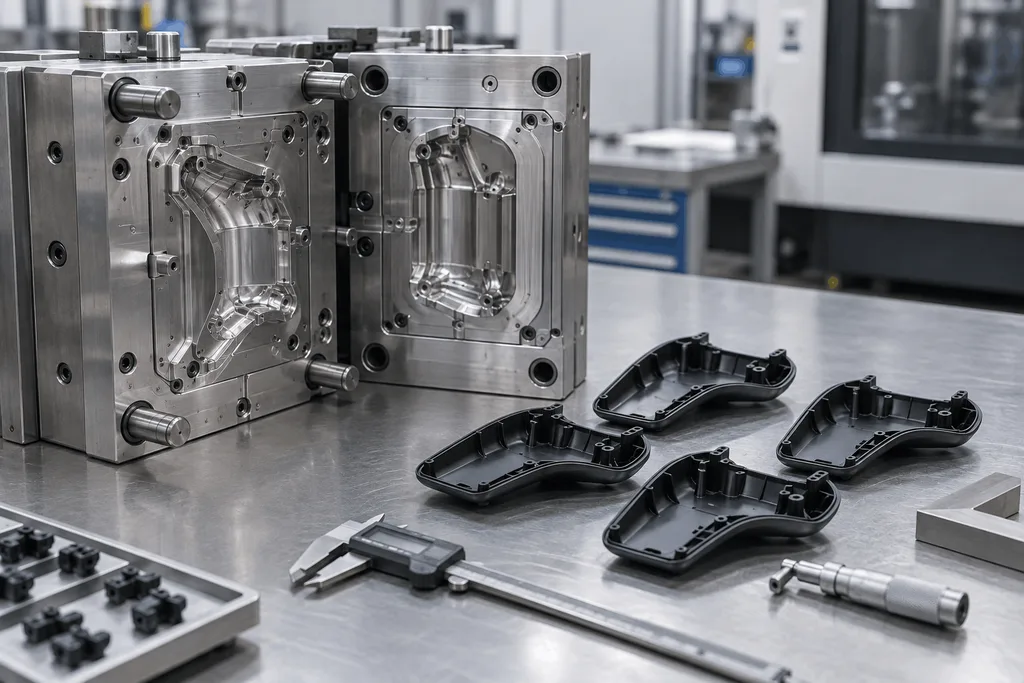
3. Review the Company’s Injection Mold Tooling Capabilities
The mold is one of the most important assets in an injection molding program.
Its design can affect part consistency, cycle time, ejection, cooling, maintenance requirements, production output, and long-term cost.
That means buyers should evaluate tooling separately rather than treating the mold as a single line item on a quotation.
Ask Where and How the Mold Will Be Built
An injection molding company may fabricate molds internally, work with specialized toolmakers, or use a combination of internal engineering and external manufacturing.
None of these structures is automatically superior.
What matters is whether responsibilities are clear.
Ask who designs the mold, who approves the mold concept, where fabrication takes place, who controls revisions, who validates the tool, and where the mold will ultimately run.
The supplier should be able to explain that workflow without ambiguity.
Match Tool Construction to the Production Program
A prototype tool and a long-life production mold are built around different priorities.
Depending on the application, tooling decisions may involve aluminum or steel construction, single- or multi-cavity layouts, hot or cold runners, inserts, sliders, lifters, complex cooling, textured surfaces, or replaceable wear components.
The correct tool specification depends on factors such as:
part geometry, resin, expected volume, program life, surface requirements, cavity count, dimensional requirements, and desired production efficiency.
A lower tooling quotation is therefore not automatically a better value.
Two suppliers may be pricing significantly different mold constructions.
Clarify Mold Ownership Before Issuing a PO
This is one of the most practical questions procurement teams can ask.
The commercial agreement should make it clear who owns the tooling after payment, where it will be stored, who is responsible for normal maintenance, what happens if major repairs are required, and whether the customer can transfer the mold under agreed conditions.
These details are easier to resolve before a purchase order is issued than after the program is already in production.
Ask About Mold Maintenance
Production tools are working assets.
They may eventually require cleaning, inspection, lubrication, replacement components, insert changes, or repair of wear areas.
For longer-running programs, ask how mold maintenance is documented and how the supplier distinguishes routine upkeep from customer-funded design changes or major repairs.
4. Confirm Machine Fit and Production Capacity
A capable injection molding company can still be the wrong supplier for a particular component.
One reason is equipment fit.
Injection molding machines differ in clamping force, shot capacity, platen dimensions, tie-bar spacing, control systems, auxiliary equipment, and automation.
Can the Proposed Equipment Run Your Part Properly?
Buyers do not need to select the press themselves, but the supplier should understand which equipment is appropriate for the mold and material.
A large projected area can influence clamp requirements. Part and runner volume affect shot requirements. Mold dimensions must physically fit the machine. Some resins require processing conditions or auxiliary systems that also affect equipment selection.
A meaningful technical review should account for these factors before production planning begins.
Look Beyond the First Purchase Order
Capacity becomes particularly important for OEM programs.
A supplier may comfortably support an initial run of 5,000 parts but face a different challenge if annual demand later reaches 500,000.
Ask what production assumptions are being used for the quotation.
If forecast demand could increase, discuss that before tooling is finalized because cavity count, automation, machine strategy, and tooling design may be affected.
Haumann’s high-volume injection molding capabilities provide additional context for programs intended to move beyond initial production into larger repeat volumes. high-volume injection molding capabilities
Capacity questions should also address continuity. Depending on how important the component is to your operation, ask how the supplier manages scheduling, machine availability, planned maintenance, and unexpected production interruptions.
5. Evaluate Material and Resin Expertise
Material selection should never be reduced to “What plastic is cheapest?”
Polypropylene, ABS, polycarbonate, nylon, TPE, polyethylene, filled materials, and high-performance engineering polymers behave differently during molding and in service.
The correct choice depends on what the component needs to do.
Factors can include mechanical loads, impact, chemical exposure, operating temperature, moisture, appearance, flexibility, UV exposure, wear, electrical requirements, and applicable regulatory specifications.
Xometry’s injection molding material selection guide provides a useful overview of how different material requirements affect resin selection. injection molding material selection guide
Ask Whether the Supplier Has Relevant Resin Experience
A manufacturer does not need to process every polymer ever developed.
It should, however, understand the material specified for your project—or clearly explain how it will establish a reliable process for it.
For moisture-sensitive materials, drying conditions matter. Reinforced compounds can introduce different tooling and wear considerations. High-temperature engineering polymers can require different processing capabilities than commodity resins.
Ask About Material Control
Material handling can be just as important as material selection.
Depending on project requirements, ask how the supplier manages material identification, resin lots, drying, storage, approved regrind, colorant, and substitutions.
A supplier should not silently replace a specified resin because another material appears similar.
Any substitution that can affect product requirements should be documented and approved through the project’s change-control process.
6. Review Quality Control With Evidence, Not Marketing Language
Almost every injection molding manufacturer says it produces high-quality parts.
That statement alone tells a buyer very little.
The more useful question is:
How does the company verify that molded parts meet the agreed requirements?
Quality control can include incoming material verification, first-article inspection, dimensional measurement, in-process checks, visual inspection, process monitoring, traceability, final inspection, nonconformance control, and corrective-action procedures.
Not every project needs the same level of documentation.
A simple consumer component and a tightly controlled OEM component may require very different inspection plans.
Focus on Critical Requirements
It is often more useful to identify critical-to-function dimensions and characteristics than to treat every feature as equally important.
Ask how the supplier intends to verify those requirements during mold trials and production.
If you require a particular inspection report, sampling plan, traceability system, or measurement method, state it in the RFQ instead of assuming it will automatically be provided.
Verify Certifications Rather Than Assuming Them
Some products or industries require particular quality-management or regulatory systems.
If certification is important to your project, verify the supplier’s current certificate, issuing body, scope, manufacturing location, and applicability to the work being quoted.
Do not assume that a logo on a sales page automatically covers your program.
For buyers evaluating quality-management frameworks, the International Organization for Standardization provides current information about ISO 9001 quality-management requirements. ISO 9001 quality-management requirements
For polymer-specific testing considerations, UL Solutions plastics testing resources can also help engineers understand how properties such as moisture behavior, physical performance, flammability, and other characteristics may be evaluated. UL Solutions plastics testing resources
7. Check Prototype-to-Production Support
A product does not normally jump from a CAD file directly into mature mass production.
A more realistic progression may look like:
Prototype → DFM → Tooling → Mold Trial → Samples → Validation → Production Release → Scale-Up
Understanding how a supplier supports these transitions is particularly important for startups, new product introductions, and OEM programs involving significant tooling investment.
Ask What Happens After the First Mold Trial
“T1 completed” should not be the end of the explanation.
Ask what happens to those first samples.
Who inspects them? Which dimensions are measured? How are observations communicated? What happens if the customer requests a design change? Who determines whether a problem requires process adjustment, tooling modification, or product-design review?
A structured sample-approval process can prevent confusion during production launch.
Manufacturing Continuity Can Reduce Handoffs
When tooling engineering and production teams work closely together, information about the part, resin, mold, processing assumptions, and customer requirements can move more smoothly from development into manufacturing.
That does not mean every project must use a single supplier for every stage.
It means buyers should understand where handoffs occur and who is responsible for them.
If you are still deciding what type of long-term supplier relationship makes sense, Haumann’s guide to choosing a custom plastic injection molding partner covers the broader partnership side of that decision. choosing a custom plastic injection molding partner
8. Evaluate Lead Time as a Process, Not One Number
A quotation that says “lead time: eight weeks” may sound clear, but it can hide several different milestones.
Injection molding projects can involve RFQ review, DFM, mold design, customer approval, mold fabrication, trials, sample inspection, corrections, validation, production, secondary processes, packaging, and shipping.
Ask which of those stages are included in the quoted timeline.
A useful schedule might distinguish:
RFQ review → DFM approval → mold design → tooling → T1 trial → sample approval → modifications → production release → manufacturing → shipment
The actual sequence will vary by project.
Understand What Starts the Clock
Does tooling lead time begin when the PO is received?
When final CAD is approved?
When the mold design is signed off?
When a deposit is received?
These details matter when product-launch deadlines are involved.
Ask What Could Change the Schedule
Several legitimate issues can alter a project timeline, including design revisions, delayed customer approvals, material availability, complex tool corrections, additional testing, and secondary operations.
A good supplier does not need to promise that nothing will ever change.
It should be able to explain dependencies clearly and communicate changes before they become surprises.
9. Compare Total Project Cost, Not Just the Lowest Quote
Price absolutely matters.
But comparing injection molding companies solely on the lowest mold price or lowest piece price can lead to a misleading conclusion.
The first step is to make sure the quotations contain the same scope.
One supplier may include mold trials, inspection, packaging, and certain tool-maintenance activities while another quotes them separately.
One may propose a single-cavity mold while another proposes four cavities.
One may quote a cold-runner tool while another uses a hot-runner strategy.
These are not equivalent quotations.
Before evaluating suppliers, understand the major variables that drive injection molding cost, tooling investment, and part pricing. injection molding cost, tooling investment, and part pricing
A Simple Supplier Comparison Example
Consider a hypothetical program expected to produce 300,000 components.
Supplier A offers a lower mold price but a higher recurring unit price. Supplier B proposes a more expensive multi-cavity tool but a lower unit price once production reaches scale.
At a very small quantity, Supplier A’s approach could produce the lower total spend.
At the full 300,000-part program volume, Supplier B’s higher tooling investment might become economically competitive.
But even that comparison is incomplete if one quotation excludes freight, assembly, inspection, or packaging.
The point is not that expensive tooling is better.
The point is that tooling and unit price should be evaluated together over the expected program volume.
Think in Terms of Total Cost of Ownership
A simplified buyer framework is:
Total Program Cost = Tooling + Production + Secondary Operations + Logistics + Inventory + Maintenance + Quality/Rework Costs
Not every element can be predicted perfectly at the quoting stage.
Still, considering them forces a more useful comparison than simply selecting the smallest number in the tooling column.
10. Evaluate U.S. and Overseas Manufacturing Options Objectively
Geography can affect injection molding projects, but location alone does not determine whether a supplier is suitable.
U.S. and overseas manufacturers can both produce successful injection molding programs.
The right production model depends on engineering requirements, economics, volume, logistics, lead times, communication, inventory strategy, and supply-chain priorities.
Questions to Consider for U.S. Manufacturing
Domestic manufacturing may be attractive when a project values local engineering access, shorter domestic freight routes, closer time-zone communication, or particular supply-chain requirements.
But buyers should still evaluate equipment, quality systems, tooling, capacity, and cost.
“Made in the USA” does not replace supplier qualification.
For companies requiring regional engineering or manufacturing support, Haumann provides information about plastic injection molding in Houston, Texas. plastic injection molding in Houston, Texas
Questions to Consider for Overseas Manufacturing
An overseas manufacturing strategy may provide different tooling or production economics, particularly for certain volumes and supply models.
But buyers should also account for international freight, customs requirements, transit time, inventory planning, engineering communication, quality oversight, and geopolitical or supply-chain exposure relevant to the program.
Do not assume “overseas” automatically means cheaper after every cost is included.
Likewise, do not assume domestic manufacturing automatically creates the lowest total cost.
Hybrid Manufacturing Can Be Worth Evaluating
Some programs benefit from combining engineering, tooling, validation, production, or supply-chain functions across more than one location.
The value of that approach depends on the project.
A supplier proposing a hybrid model should explain who is responsible for tooling, technical decisions, quality, production, and logistics at each stage.
11. Evaluate Communication and Project Management
Injection molding is an engineering and manufacturing process, but communication problems can create just as much disruption as technical ones.
A buyer should know who owns the project.
Who answers engineering questions?
Who manages the mold build?
Who communicates sample results?
Who approves tooling modifications?
Who handles production issues?
Who provides schedule updates?
If nobody can answer those questions clearly during the quotation stage, the situation may become more difficult once tooling has started.
Engineering Changes Should Be Traceable
Product development changes.
That is normal.
What matters is controlling those changes.
If a wall thickness changes, a tolerance is revised, a resin is replaced, or a mold feature is modified, the team should know which design revision is current and who approved the change.
Informal decisions hidden in long email chains can create confusion.
For complex projects, a defined change-approval process can protect both the customer and manufacturer.
Specific Answers Matter More Than Sales Language
“We can make anything.”
“We have the best quality.”
“We offer the lowest price.”
These statements are easy to make.
Useful supplier communication is more specific.
A capable manufacturer should be prepared to discuss its proposed process, relevant capabilities, assumptions, limitations, responsibilities, and next steps.
That transparency is often more valuable than an aggressive promise.
12. Review Logistics and Long-Term Supply Support
Supplier selection should not end at the molding machine.
Finished components still need to be inspected, packaged, stored where applicable, shipped, received, and integrated into the customer’s operation.
Those activities influence both cost and reliability.
Clarify Packaging and Shipping
Some molded parts can be bulk packed.
Others have cosmetic surfaces that need protection from scratching. Certain components need trays, separators, moisture protection, labeling, or customer-specific cartons.
Packaging requirements should be discussed early because they can influence labor, storage, freight density, and delivered cost.
Discuss Repeat Production and Forecasting
For repeat OEM programs, ask how the supplier uses forecasts.
Does the company plan resin purchases against expected demand?
How far in advance does production need to be scheduled?
What happens if demand rises sharply?
How are repeat orders coordinated with mold availability and maintenance?
The goal is not to demand unlimited capacity on zero notice. It is to understand how the manufacturer plans for realistic fluctuations.
Ask About Contingency Planning
No manufacturing operation is immune to disruption.
Machines require maintenance. Molds occasionally require repair. Raw-material supply can tighten. Freight can be delayed.
Ask how issues relevant to your component would be handled.
A credible answer may include alternative machines, planned tool maintenance, spare wear components, safety stock, multiple material sources where approved, or another program-specific mitigation strategy.
The appropriate contingency plan depends on the importance and risk profile of the component.
Injection Molding Company Comparison Checklist
Once technical discussions begin, use the same evaluation framework for every serious supplier.
| Evaluation Area | What to Ask | Item to Investigate |
|---|---|---|
| DFM | What engineering review occurs before tooling? | Mold is released with little technical discussion |
| Tooling | Who designs, builds, validates, and maintains the mold? | Responsibilities or specifications are unclear |
| Equipment | Which machine or equipment class is planned? | Supplier cannot explain machine fit |
| Materials | How will the specified resin be handled and controlled? | Material control or substitutions are vague |
| Quality | How will critical dimensions and requirements be verified? | Only generic “high quality” claims are provided |
| Capacity | Can output support forecast volume and growth? | No clear production-capacity discussion |
| Lead Time | What are the individual project stages? | Only one unexplained lead-time number is given |
| Cost | What exactly does the quotation include? | Important assumptions or exclusions are missing |
| Logistics | How will packaging, production, and delivery be managed? | Delivery responsibilities are undefined |
| Communication | Who owns engineering changes and project updates? | No clear project contact or approval process |
These are evaluation prompts rather than automatic pass/fail rules.
For example, outsourcing mold fabrication is not inherently a warning sign if the injection molding company maintains strong engineering control, validation, documentation, and accountability.
Red Flags to Investigate Before Selecting an Injection Molding Company
A single concern does not necessarily mean you should reject a supplier. It means the issue deserves clarification before money is committed.
Potential items to investigate include:
- A detailed production quote based on very limited part information.
- Tooling starting before meaningful DFM discussion.
- No clear explanation of the proposed mold construction.
- Unclear tool ownership or transfer conditions.
- Material substitutions without a defined approval process.
- Claims of “perfect quality” without explaining how quality is verified.
- No discussion of critical dimensions or inspection expectations.
- An unusually short schedule with no project milestones.
- An unusually low quote whose scope is difficult to understand.
- No named person responsible for engineering communication.
- No meaningful discussion of forecast production volume.
- Difficulty explaining what happens after the first mold trial.
One of the best habits in supplier selection is simply asking:
“Can you explain what is included, what is excluded, and what assumptions were used?”
A serious manufacturer should be comfortable answering that question.
12 Questions to Ask an Injection Molding Company Before Placing a PO
1. Have You Manufactured Parts With Requirements Similar to Ours?
The goal is not necessarily to find an identical previous component. Ask about relevant experience involving similar resin behavior, geometry, tolerance requirements, volumes, cosmetic requirements, or secondary operations.
2. What DFM Review Will You Perform Before Tooling Begins?
Ask what deliverable you will receive and which features will be reviewed. The discussion should address moldability and production risk, not merely provide a yes-or-no approval.
3. What Mold Construction and Cavity Strategy Do You Recommend, and Why?
A recommendation should connect to forecast volume, part geometry, material, expected tool life, and production requirements. Ask about alternatives if more than one strategy is practical.
4. Where Will Our Mold Be Built and Where Will Production Run?
This helps clarify responsibility, engineering communication, validation, freight, tool transfer, and the eventual production location.
5. Who Owns the Mold After Payment?
Tool ownership, storage, maintenance, access, and transfer conditions should be understood before the purchase order rather than after a commercial disagreement occurs.
6. How Will Mold Maintenance and Repairs Be Handled?
Ask what routine maintenance is included, how repairs are documented, and how approval works if a substantial repair or design modification becomes necessary.
7. Which Machine Is Expected to Run Our Part?
You do not need the supplier to promise one particular machine forever. You need confidence that press capacity, shot size, mold size, and processing requirements have been considered.
8. How Will Our Specified Resin Be Stored, Processed, and Controlled?
This is particularly relevant for moisture-sensitive materials, custom compounds, reinforced resins, color-controlled products, and applications requiring traceability.
9. What Inspection and Quality Documentation Will You Provide?
Define this before production. If you need first-article inspection, critical-dimension reporting, traceability, material documentation, or a specific sampling method, state that requirement.
10. What Happens After the First Mold Trial?
Ask who inspects the samples, how results are reported, who approves modifications, and what conditions must be met before the mold is released for production.
11. Can Your Production Capacity Support Our Expected Annual Volume?
Discuss both the initial requirement and reasonable future growth. Capacity planning should match the real forecast rather than an undefined promise that the supplier can “scale.”
12. How Will Engineering Changes, Quality Issues, and Schedule Updates Be Communicated?
Ask who your contact will be and how decisions are documented. Clear project ownership can prevent small issues from becoming larger manufacturing problems.
Example Injection Molding Supplier Evaluation Scorecard
The following is a starting framework, not an industry-standard scoring system.
Buyers should adjust the weighting to match their project.
| Evaluation Criterion | Example Weight |
|---|---|
| Engineering and DFM | 20% |
| Quality | 20% |
| Tooling | 15% |
| Production capability | 15% |
| Total project cost | 10% |
| Lead time | 10% |
| Communication | 5% |
| Logistics | 5% |
| Total | 100% |
For a highly regulated or technically demanding component, quality and engineering might deserve greater weighting.
For a high-volume commodity component, production economics and capacity may become more important.
For a startup approaching its first tooling program, engineering guidance and launch support might carry more value.
A scorecard should support human judgment—not replace it.
How to Shortlist Injection Molding Companies Step by Step
A structured selection process makes it easier to compare suppliers on equivalent criteria.
Step 1: Define the Project
Prepare the CAD model, drawing, resin requirement, annual demand, quality expectations, secondary operations, and delivery needs.
Step 2: Build an Initial Supplier List
Screen for basic technical fit before requesting detailed quotations. A supplier that cannot process the material, mold size, or expected volume should not advance simply because its website appears impressive.
Step 3: Send Comparable RFQ Information
Give serious candidates substantially the same project information.
Otherwise, you may end up comparing quotations based on different assumptions.
Step 4: Review the Technical Response
Look beyond how quickly the quotation arrives.
Did the supplier ask intelligent questions?
Were potential manufacturing issues identified?
Can the company explain its tooling strategy?
Technical engagement can reveal more than sales copy.
Step 5: Normalize the Quotations
Put major assumptions side by side.
Compare mold material, cavities, runner strategy, tooling scope, inspection, secondary operations, piece pricing, packaging, freight responsibility, and other commercial terms.
Step 6: Verify Quality and Capacity
Ask for appropriate evidence that the company can support your specific requirements.
The level of verification should reflect the risk and importance of the component.
Step 7: Compare Total Project Economics
Review tooling and production together.
Consider logistics, secondary operations, inventory, maintenance, and quality requirements rather than focusing on one line item.
Step 8: Resolve Open Questions Before Issuing the PO
Tool ownership, revisions, approvals, quality requirements, tooling assumptions, delivery responsibilities, and project contacts should be reasonably clear before work begins.
That preparation can make the difference between a smooth tooling launch and months of avoidable commercial confusion.
Frequently Asked Questions About Choosing an Injection Molding Company
Look for capabilities that match your actual project: DFM and engineering support, appropriate tooling expertise, suitable molding equipment, material knowledge, quality controls, capacity, realistic lead times, communication, and logistics. Evaluate evidence and project-specific responses rather than choosing a supplier solely because it offers the lowest initial quotation.
Send comparable RFQ information to each supplier and normalize the quotations before making a decision. Compare tool construction, cavities, material assumptions, production volume, quality requirements, secondary operations, packaging, logistics, and project responsibilities. Two quotations with different mold specifications should not be compared as though they offer identical value.
Not automatically. A lower quotation may be the right choice when the technical scope and production assumptions are comparable, but it should first be checked for exclusions. Consider mold construction, expected production volume, piece price, inspection, maintenance, secondary operations, freight, and long-term program economics.
DFM helps identify manufacturability issues while the product is still relatively easy to modify. Wall thickness, draft, undercuts, gates, ejection, tolerances, material behavior, and other factors can affect tooling complexity and production performance. Addressing important risks before mold fabrication can reduce unnecessary tooling changes later.
Provide a 3D CAD model, 2D drawing where available, material requirement, critical tolerances, surface finish, annual volume, initial order quantity, secondary operations, quality requirements, packaging needs, destination, and target timeline. Clearly identify any requirements that are still being determined.
Verify the capabilities most relevant to your project. This may include reviewing DFM and tooling responses, asking about proposed equipment, examining quality procedures and documentation, confirming applicable certifications, discussing production capacity, understanding material controls, and clarifying who manages the program.
The answer depends on the project. Compare tooling, production economics, engineering communication, freight, inventory, lead time, capacity, quality management, and supply-chain requirements. Neither domestic nor overseas manufacturing is automatically the better option for every injection molding program.
Some manufacturers can support development from early prototypes through tooling, validation, and high-volume production, while others specialize in particular stages. Ask how each stage is handled, where handoffs occur, and whether the proposed tooling strategy is appropriate for the expected production program.
Ownership is a commercial matter that should be clearly defined in the agreement or purchase order. Buyers should understand who owns the mold after payment, where it will be stored, who pays for maintenance or major repairs, and what conditions apply if the tool needs to be transferred.
Provide realistic annual demand and expected growth, then ask what equipment and production strategy the supplier proposes. Discuss scheduling, cavity count, cycle assumptions, machine availability, and scale-up planning. Capacity should be evaluated against your forecast rather than a generic statement about factory size.
Choosing the Right Injection Molding Company Comes Down to Project Fit
The right injection molding company is not necessarily the supplier with the biggest factory, the cheapest mold, the shortest advertised lead time, or the longest list of materials.
What matters is whether the company can support the requirements of your program.
For engineering teams, that begins with useful DFM and tooling decisions.
For procurement teams, it means comparing quotations on equivalent scope and understanding total project cost.
For quality teams, it means knowing how critical requirements will be verified.
For operations teams, it means confidence that production and logistics can support demand after the mold is approved.
A strong supplier-selection process therefore comes down to four things:
technical fit, measurable quality, transparent commercial scope, and dependable production support.
When those areas are evaluated before the purchase order, supplier selection becomes much more disciplined than choosing whichever quotation happens to have the lowest number at the bottom.
Evaluating an Injection Molding Company for Your Next Project?
If you have a CAD model, material requirements, expected annual volume, and project objectives, Haumann Technology can review your manufacturing requirements and discuss an appropriate DFM, tooling, and production approach.
Use Haumann’s project quote and DFM review request to share your project requirements with the engineering team. project quote and DFM review request