Key takeaways: High volume is not a number — it is the point where production tooling pays for itself across stable demand. Low volume is not a compromise on quality — it is a leaner tooling strategy for uncertain or early demand. The scaling decision turns on five questions: demand certainty, design stability, tooling payback, quality risk at scale, and timing.
High Volume vs Low Volume Injection Molding: Cost, Tooling & When to Scale
Quick answer: the decision in one table
Every injection molding program sits somewhere on a spectrum, not in one of two boxes. The right strategy is the one whose tooling investment matches how sure you are about demand and how settled the design is. Read the table as a guide to the trade-offs, not as a price list — no volume figure here is a universal threshold, because the threshold moves with the part.
| Low volume | Bridge | High volume | |
|---|---|---|---|
| Tooling strategy | Leaner, simpler tool built for fewer cycles | Interim tool covering demand while production tooling is built | Production tool: multi-cavity, built for long tool life |
| Per-part economics | Higher per part, because tooling is spread over fewer parts | Between the two, for a limited run | Lower per part, once tooling cost is spread over many parts |
| Best when | Demand is uncertain, the design may still change, or quantities are small | A production tool is coming but parts are needed now | Demand is large, stable and forecastable |
| Main risk | Paying production-tooling prices for uncertain demand | Treating an interim tool as a permanent one | Committing to expensive tooling before demand is proven |
If you are quoting a program today, the honest starting point is high volume injection molding as a service — and this post explains when that service is the right buy, and when it is premature.
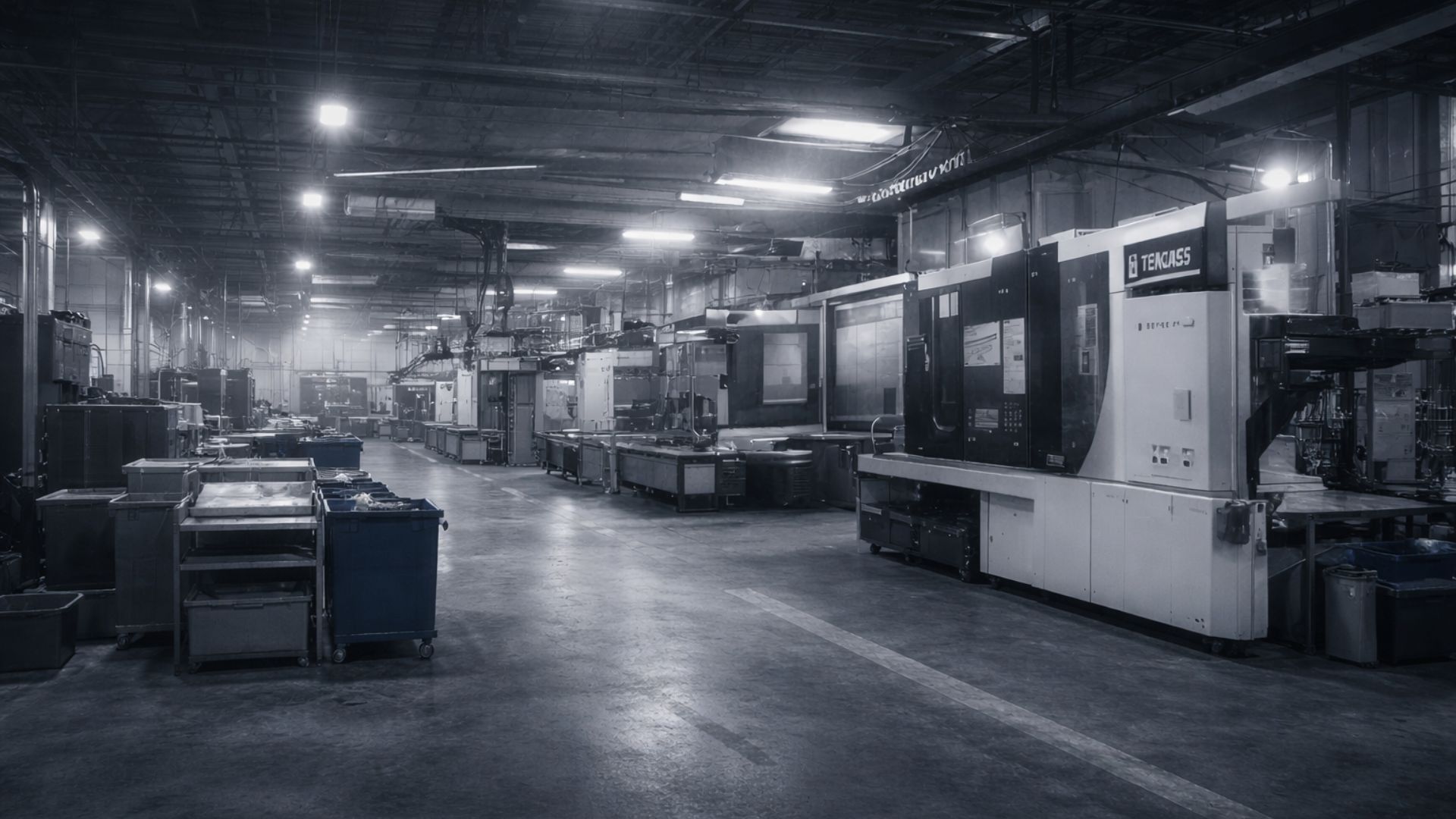
What counts as high volume vs low volume
Buyers often ask for the number — the annual quantity at which a program becomes “high volume.” There is no honest single answer, and any post that gives one is guessing. The threshold is set by the part, not by the industry: a small, simple part reaches payback far earlier than a large, tight-tolerance part, because its tooling is simpler and its cycle is faster. Material matters too — a glass-filled grade that wears tooling changes the tool-life calculation — and so does the finish and tolerance specification, which decide how much process control each part needs.
What does not change with volume is the process itself. A low-volume part is still injection molded, still subject to the same process controls, and still inspected to the same standard. Volume changes the tooling strategy and the economics around the part; it is not a quality tier. That distinction matters because it reframes the question: instead of “is my quantity high enough?”, ask “does my demand justify production tooling yet?” — a question with an answer that can be worked out from your forecast, not from a generic threshold.
Tooling: single vs multi-cavity, hot runner vs cold runner, tool life
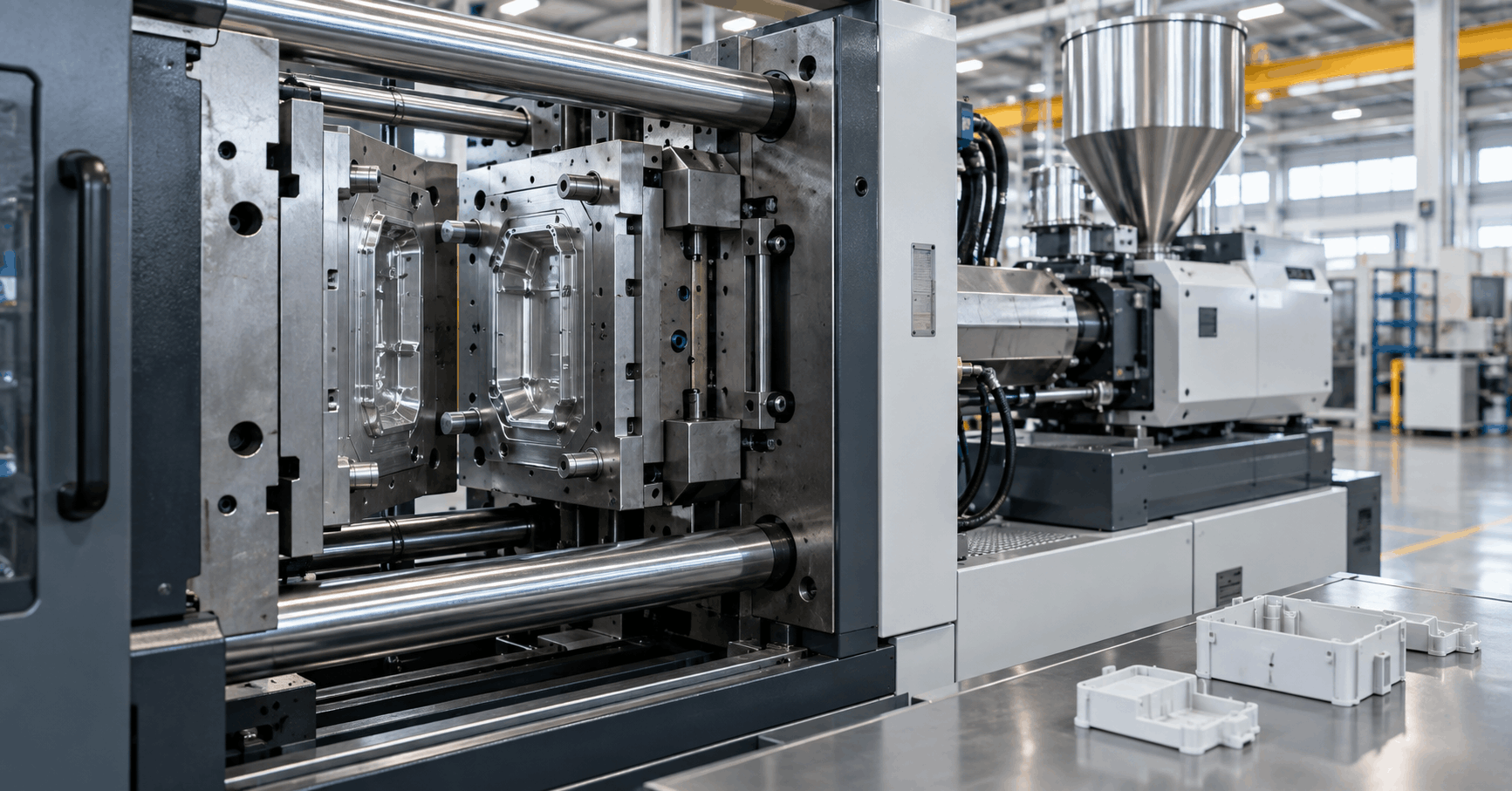
Tooling is where the high-volume decision is actually made, because tooling is the largest upfront investment in any molding program and the one that is hardest to reverse. A single-cavity tool is simpler and cheaper to build; a multi-cavity tool produces several parts per cycle and therefore cuts cycle cost, but it costs more, takes longer to build, and introduces a new engineering problem — making every cavity produce the same part.
Runner choice works the same way. A cold-runner system is simpler and cheaper, but material in the runner is scrapped or reground each cycle. A hot-runner system keeps material molten to the gate, cutting waste and often cycle time, at the price of a more complex and more expensive tool. At low volumes the simpler system usually wins on economics; at high volumes the waste and cycle savings of the more complex system compound across every part.
Tool steel and construction follow the same logic: a tool expected to run for a long production life is built more robustly than one expected to run a short program. The injection mold tooling decision is therefore not “best tool” in the abstract — it is the tool whose life, cavity count and runner system match the demand it will actually serve. Overbuilding tooling for uncertain demand is the most expensive mistake in this decision, and underbuilding for proven demand is the second.
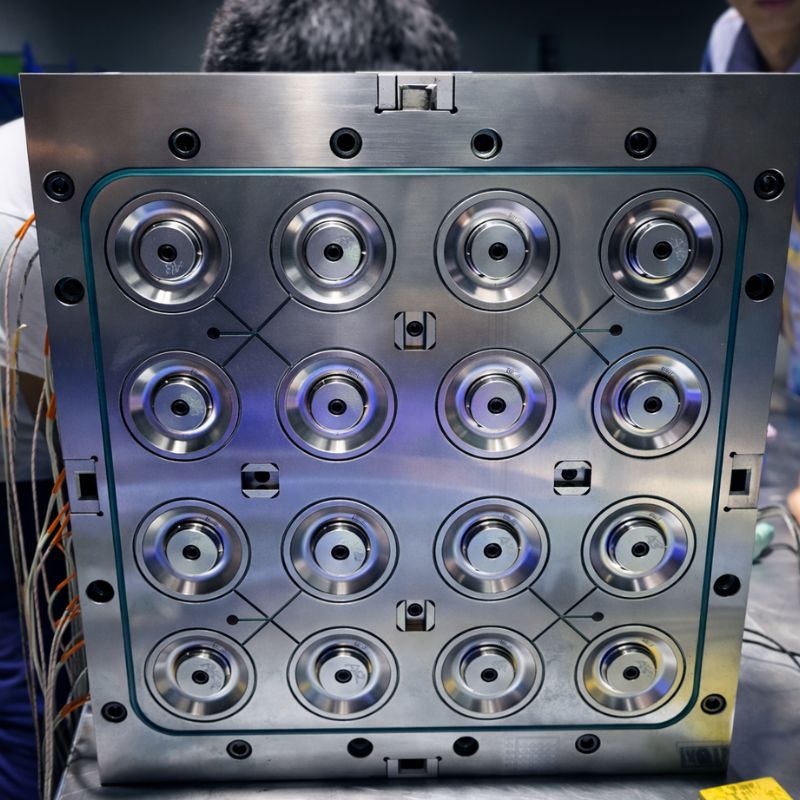
Per-part economics: how amortisation flips the decision
Per-part cost in injection molding has two very different components: the cost of making one part (material, machine time, labour, inspection) and the tooling cost spread across every part the tool will ever make. At low volumes the second component dominates — a modest tooling bill divided by a small quantity is a large amount per part. At high volumes it fades — the same bill divided by a large quantity becomes small — and the per-part making cost takes over.
That is why the scaling curve is not a straight line. Below the threshold, spending more on tooling makes parts more expensive; above it, spending more on tooling makes parts cheaper, because multi-cavity output and automation cut the making cost faster than the tooling bill grows. The flip point is the payback point, and it can only be located with real inputs: expected annual quantity, how certain that forecast is, and the tooling options on the table. The injection molding cost pillar explains the drivers in full — this post deliberately states drivers only and links there, because the pillar owns all pricing content and no figures are invented here.
One practical consequence: a program with uncertain demand should almost never jump straight to production tooling. The cost of being wrong — an expensive tool serving a small run — is far larger than the cost of an interim step, which is what bridge tooling exists for.
Quality and consistency at scale: SPC, cavitation balance, automation
Scale does not just multiply output; it multiplies variation. A process that produces acceptable parts one cavity at a time can produce visibly different parts across eight cavities, and a drift that is harmless over a short run becomes a shipment problem over a long one. That is why high-volume programs lean on three disciplines that low-volume programs use more lightly.
First, statistical process control (SPC): measuring key dimensions during the run and acting on trends before they become defects, rather than inspecting quality in afterwards. Second, cavitation balance: engineering the runner and gate system so every cavity fills evenly, then verifying that balance on the tool rather than assuming it. Third, automation where it removes variation — handling, inspection or assembly steps where a human touch would otherwise be the largest source of inconsistency.
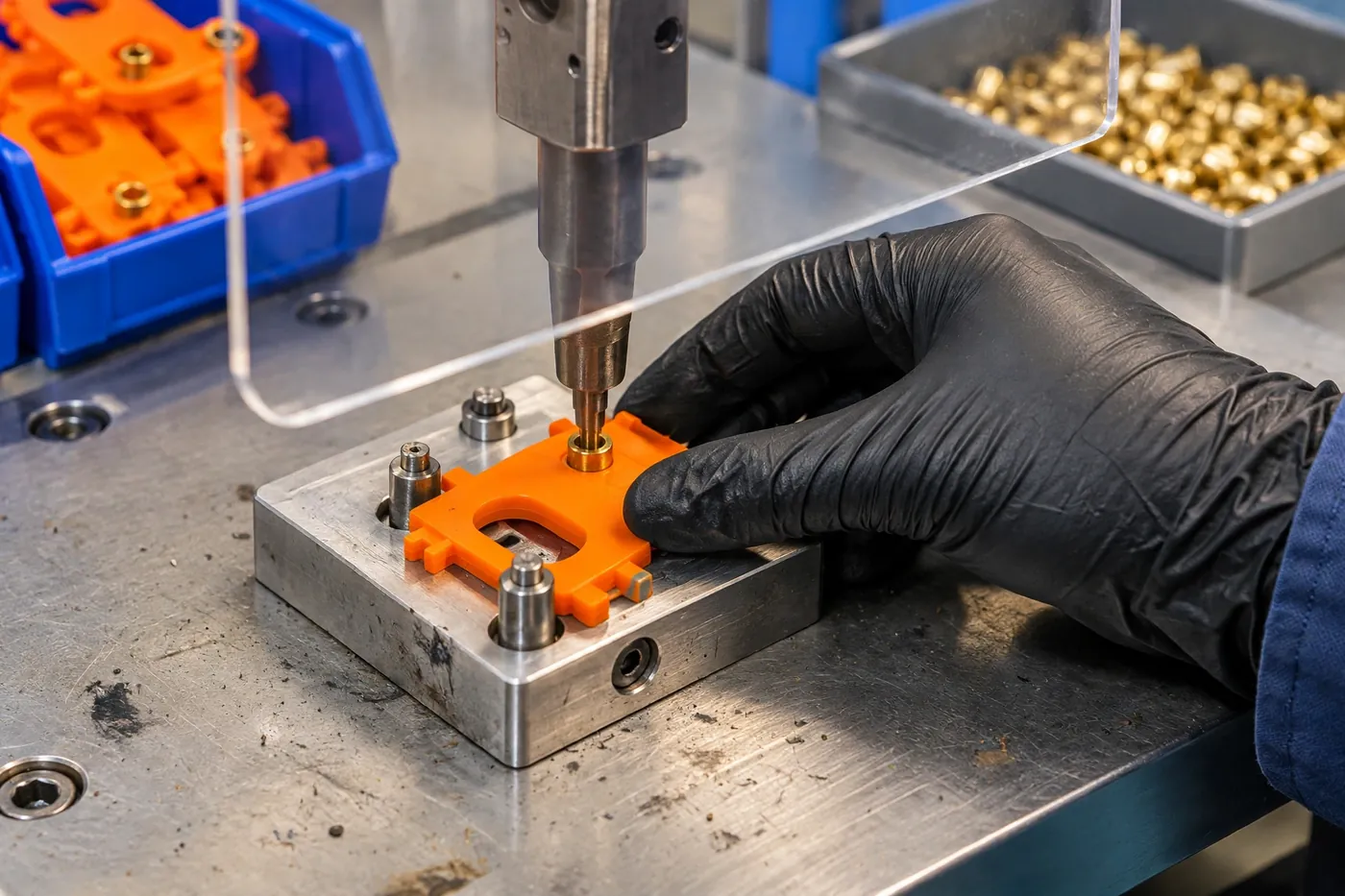
None of this is exotic; it is the same quality thinking applied with more rigour because the stakes of a drift are higher. A supplier that can show SPC data and cavity-balance verification for a high-volume program is showing you the difference between a tool that was built and a process that is controlled. Secondary operations scale the same way — the comparison in heat staking vs ultrasonic welding shows how joining and assembly choices, made early, decide whether a scaled program stays consistent or accumulates variation at every secondary step.
When to stay low volume: prototyping, bridge tooling, uncertain demand
Staying low volume is often the disciplined choice, not a fallback. It is right while the design is still moving — a tool cut for a design that changes is a tool paid for twice. It is right while demand is a forecast rather than an order book — tooling follows proven demand, not hoped-for demand. And it is right for genuinely small programs: spare parts, niche variants, and products whose market is small by nature, where production tooling would never pay back however well it is built.
Bridge tooling deserves its own mention because it is misunderstood. It is not a cheap production tool; it is an interim tool with a defined job — covering demand while a production tool is built, or proving a design at real molding conditions before production tooling is committed. Used that way, it de-risks the scaling decision twice: it gets parts into the market sooner, and it generates real molding data that makes the production-tool decision better informed. Used as a permanent substitute for production tooling, it disappoints, because it was never built for that life.
The same logic applies in reverse: if a program has already proven demand, a stable design and a long horizon, staying low volume is no longer caution — it is paying a per-part premium indefinitely for a risk that no longer exists.
The scaling decision: five questions to ask before committing
Before approving production tooling, work through these five questions with your molder. They are the whole decision, stripped of jargon:
- How certain is the demand? Is the forecast backed by orders, contracts or a proven sales history — or is it an estimate? Tooling follows certainty, not optimism.
- Is the design stable? Has it survived prototyping and validation, or is a revision likely? A tool cut too early is the most expensive revision of all.
- Does the tooling pay back on the forecast? On your actual numbers — not a generic threshold — does the per-part saving repay the tooling investment within the program’s expected life?
- What is the quality risk at scale? Does the part have tight tolerances, cosmetic surfaces or multi-cavity variation risks that need cavitation balance and SPC proven before scaling?
- What does timing require? Is there a market window that bridge tooling should cover while production tooling is built, or can the program wait for the production tool?
If the answers point to scaling, the next step is a tooling and process review on the real part — not a generic quote. Scaling to production volumes? Request a tooling and DFM review. Send the design file, the material if specified, the expected annual quantity and how certain that forecast is, and the timeline — those four inputs are what turn this decision from guesswork into economics.
Frequently Asked Questions
There is no single universal number. High volume means the annual demand is large and stable enough that the cost of production tooling, multi-cavity molds and automation is spread thinly across many parts. What counts as high volume therefore moves with the part: its size, complexity, material and tolerance requirements all shift the threshold.
Usually yes, once the volume is high enough — but not because the molding itself is cheaper. The saving comes from amortisation: a larger upfront tooling investment divided by many more parts, plus faster cycles from multi-cavity tools and automation. Below the threshold, that same tooling investment makes each part more expensive, not less.
As many as your demand, cycle time and quality requirements justify — no more. More cavities raise output per cycle but also raise tooling cost, complexity and the risk of cavity-to-cavity variation. The right count comes from annual demand, required delivery rate and how tightly each cavity must match the others.
When the part design is stable, the material and finish requirements exceed what printing can deliver consistently, and the expected quantity makes tooling pay back. Printing remains the right choice while the design is still changing or quantities are very small; molding wins once repeatability and unit economics matter more than iteration speed.
Bridge tooling is an interim mold — typically simpler and faster to build than a full production tool — used to cover demand while a production tool is being built, or to prove out a design at real molding conditions before committing to production tooling. It bridges the gap between prototyping and full production.
No. Low volume molding uses the same molding process and the same quality disciplines — process control, inspection and documentation — as high volume work. What changes is the tooling strategy and the economics, not the standard the parts are held to.
Cavity count, tool steel and construction, hot-runner versus cold-runner systems, and the expected tool life. A production tool built for long runs carries more of each; a low-volume tool is built leaner because it does not need to survive as many cycles. The cost pillar explains the drivers in full.
Yes, and there is an advantage in it: the supplier already knows the part, its material behaviour and its failure modes when the volume scales. The transition is then a tooling and process decision, not a re-qualification of an unknown part with an unknown supplier.
Cavitation balance is how evenly molten material fills every cavity of a multi-cavity mold. If cavities fill unevenly, parts from different cavities vary in weight, dimensions and appearance — a variation that is invisible at low volumes and becomes a quality problem at scale, which is why it is engineered and verified before production runs.
The part design file, the material if specified, the expected annual quantity and how certain that forecast is, and the timeline. With those four inputs a molder can recommend a tooling strategy on economics, not guesswork.