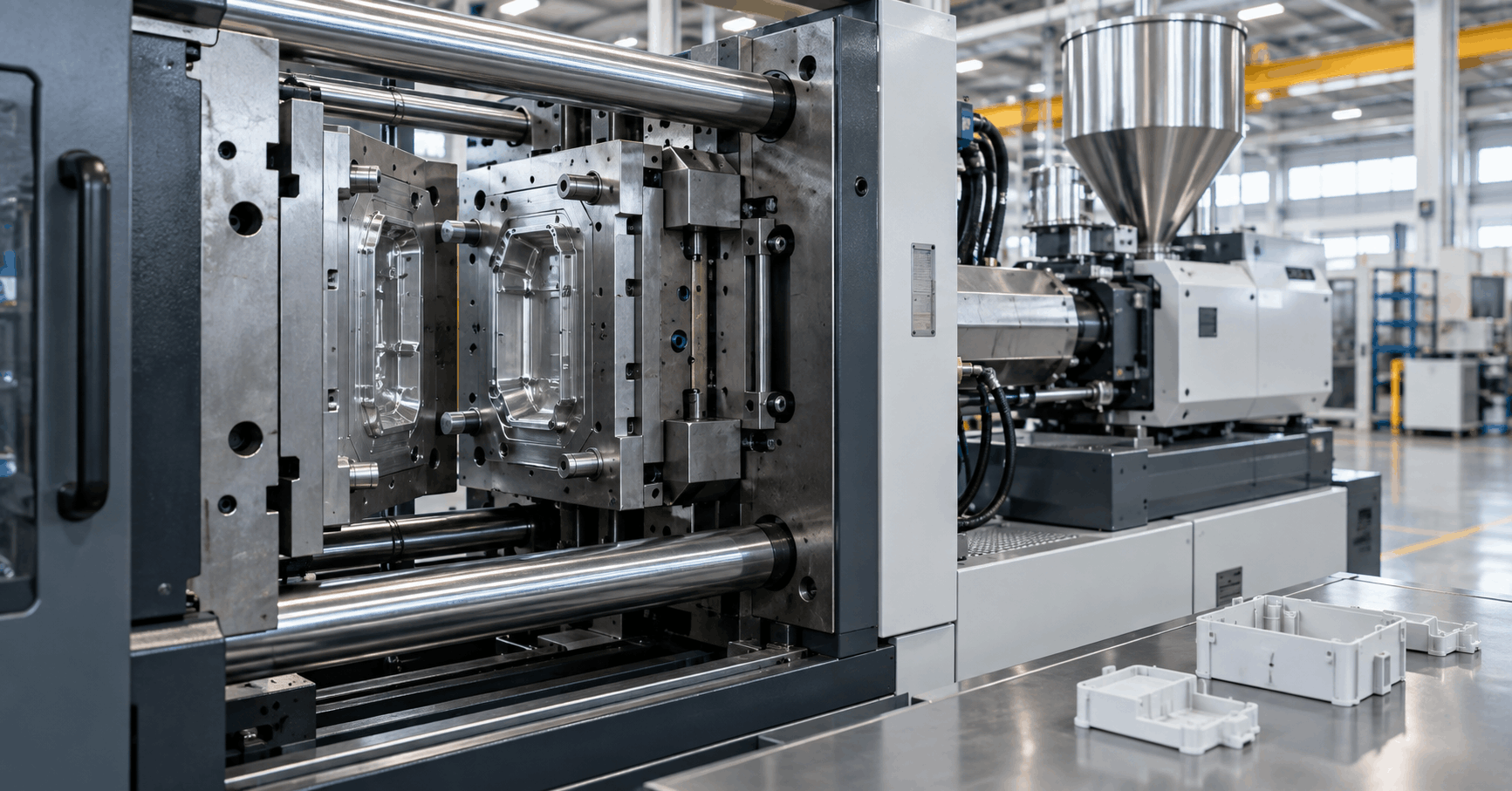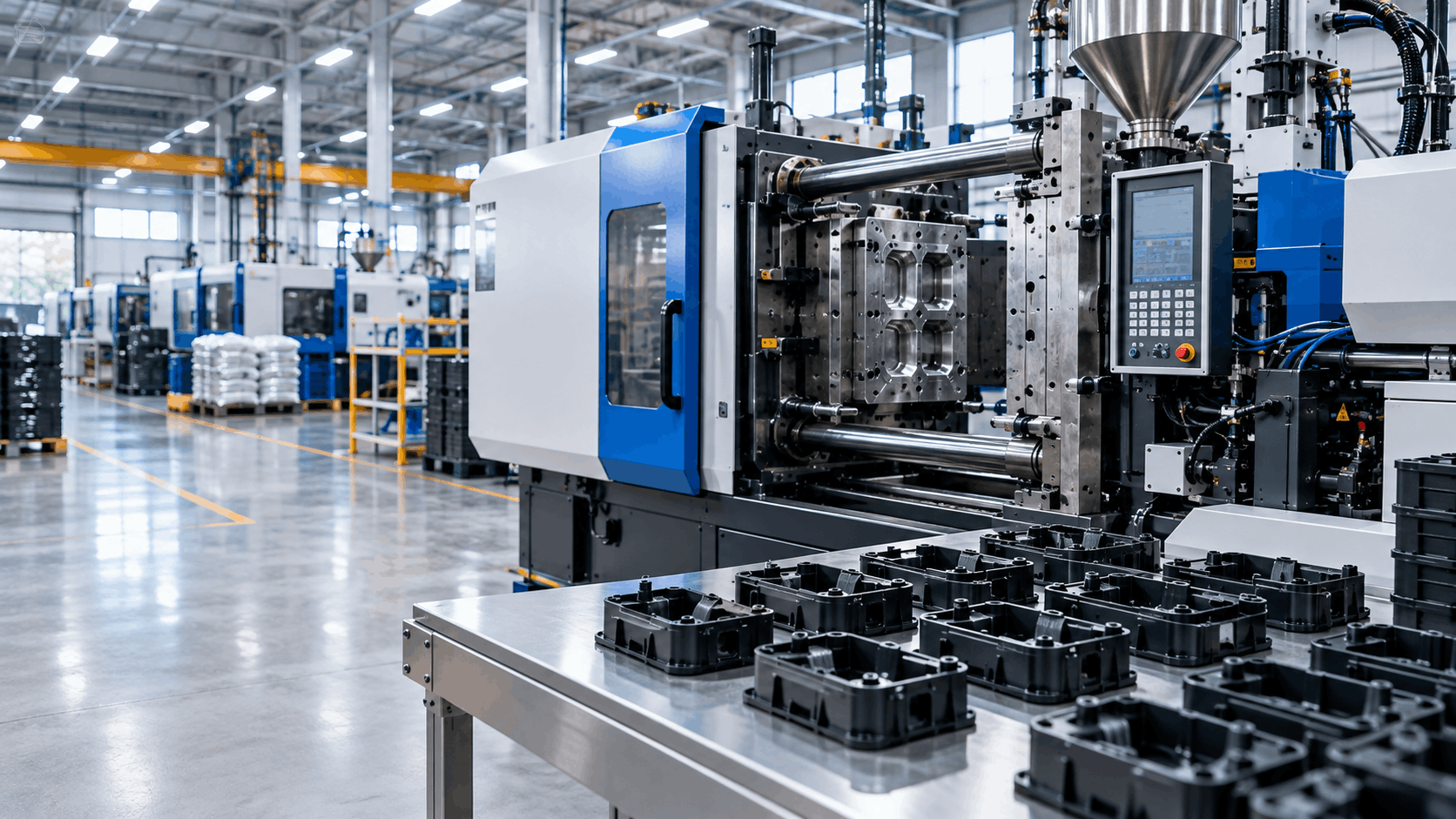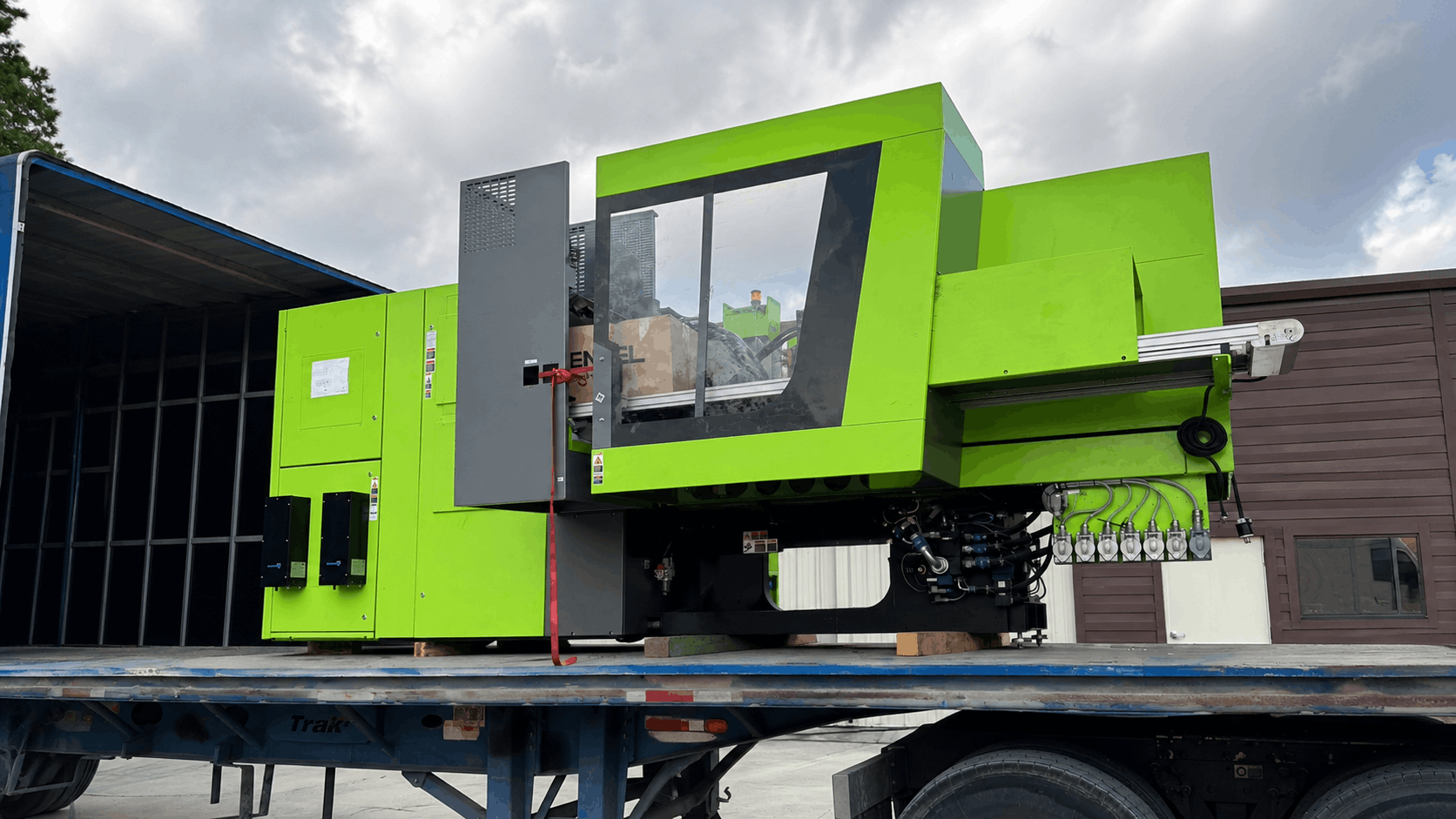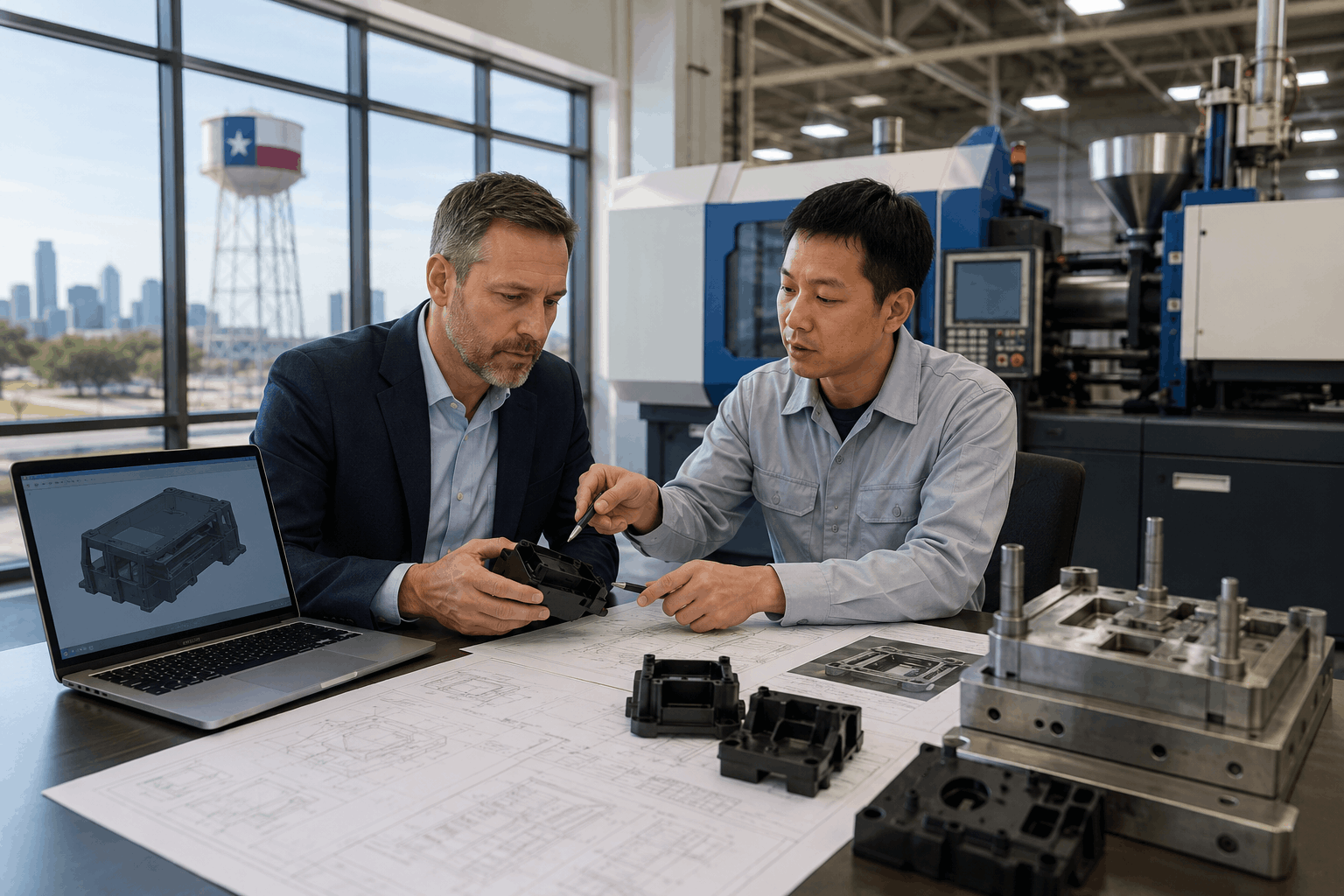
For teams comparing injection molding Texas suppliers, choosing the right partner requires much more than checking machine availability or unit price. A low quote can look attractive. Yet tooling decisions, process control, engineering support and production planning often determine the program’s real cost.
Some suppliers can produce acceptable samples but struggle when serial production begins. Dimensions drift. Tool maintenance becomes unclear. Updates arrive late. Then a sourcing decision creates sorting work, missed deliveries or an expensive transfer.
Review the complete manufacturing system before issuing a purchase order: engineering, tooling, quality control, traceability, capacity, communication and lead-time planning. This guide shows Texas and Houston buyers what to assess.
Start With Your Actual Injection Molding Requirements
A supplier cannot prepare a meaningful quotation without understanding the part and the production program. Define the project before comparing prices.
Part and Application Requirements
Share the component’s dimensions, geometry, function, cosmetic expectations, operating environment, assembly interfaces and expected life.
Identify critical dimensions and features that affect fit or function. A simple-looking housing may still face heat, vibration, moisture or impact. The drawing does not always tell the complete application story.
Production Requirements
State whether the project needs prototypes, bridge production or full-scale manufacturing. Include expected annual volume, material requirements, launch date, packaging and assembly needs.
Explain whether future demand may increase, because tooling that suits early production may not support later volume efficiently.
A reliable supplier should ask detailed questions before issuing a firm quote. Fast pricing is not a replacement for technical review.
Evaluate the Supplier’s Engineering and Design Support
Early engineering review can prevent expensive mold corrections. Once steel has been cut, even a small change may affect cost, timing and validation.
Design for Manufacturability Review
Ask whether the supplier performs a documented design for manufacturability review before tooling begins. The review should consider:
- Wall thickness and draft
- Ribs, bosses and undercuts
- Gate placement and weld lines
- Sink-mark and warpage risk
- Ejection requirements
- Assembly interfaces
A thick boss beside a thin cosmetic wall may support a fastener but also increase sink risk. A useful DFM review explains that tradeoff.
No recommendation guarantees defect-free production. Still, early review reduces avoidable tooling risk.
Material Selection Support
Resin selection should reflect strength, impact resistance, heat exposure, moisture behavior, dimensional stability and appearance. Customer or application requirements may also limit the available choices.
Ask one direct question: Will you review the design before tooling begins and document the manufacturability risks?
The answer should describe the process, deliverable and responsible contact—not only say “yes.”
Review Tooling Capability Before Comparing Unit Prices
The mold influences every part produced during the program. Therefore, tooling deserves the same attention as piece price.
Review Haumann’s approach to injection mold tooling and engineering support when comparing tooling responsibilities and validation steps.
Tool Design and Construction
Ask how the supplier selects tool steel, cavity layout, gates, runners, vents, cooling channels and ejection systems. These decisions should match the resin, geometry, volume and expected tool life.
Replaceable inserts can simplify maintenance. Cooling affects cycle stability, while venting helps trapped air escape. Small details. Big consequences.
The Plastics Industry Association provides codes and standards resources for plastics processing, including references related to molded-part tolerances and design practices.
Tool Ownership and Documentation
Confirm mold ownership, storage, maintenance responsibility, repair approval and record retention. The agreement should also explain what happens if production transfers.
Do not leave this for later. Unclear ownership can become a serious problem when demand or supplier relationships change.
Tool Trials and Validation
The tooling plan should include an initial trial, sample inspection, process adjustment, buyer feedback and final approval. Corrective changes may be needed before release.
Ask what evidence will be provided at each stage and who approves the mold for production. A trial sample should never quietly become a production release.
Examine the Quality-Control System, Not Just Final Inspection
Quality should be controlled throughout production. Final inspection cannot reliably protect a process that changes during the run.
The ISO quality-management principles emphasize process control, evidence-based decisions and continual improvement. These ideas are useful when evaluating a supplier’s quality management approach.
Incoming Material Control
Material controls may include resin verification, supplier documents, batch identification, storage and drying. Ask how the supplier prevents mixing and handles substitutions. Resin, colorant or reinforcement should not change without approval.
In-Process Monitoring
In-process controls may include first-piece approval, parameter monitoring, visual checks, dimensional sampling and segregation of nonconforming parts.
Ask which parameters will be controlled and how often critical features will be checked. Sampling should reflect the part, process risk and customer requirements.
Also ask what happens when a result begins moving toward a specification limit. A mature process watches trends, not only pass-or-fail results.
Final Inspection
Final inspection may use calipers, gauges, fixtures, coordinate measurement where appropriate, functional tests, appearance checks and assembly verification.
Advanced equipment alone does not guarantee control. The method must suit the feature and tolerance. Avoid unsupported promises made before geometry, material and tooling are reviewed.
Confirm Material and Production Traceability
Traceability connects delivered parts with their production history. It matters for OEM programs, repeat orders and issue investigation.
A useful system may link a finished batch to the material lot, production date, mold revision, machine or line, process records, inspection results and packaging batch.
This information helps investigate dimensional variation, material changes, assembly concerns and field complaints. It also supports focused containment.
Ask: Can you trace a delivered batch back to its material, production and inspection records?
Then ask to see how the process works. A blank traveler, redacted report or sample batch record often reveals more than a marketing statement.
Compare Production Capacity and Scalability
Do not choose a plastic injection molding supplier in Texas only for the current order. Consider what happens if demand doubles, a second version launches or the part needs assembly.
A scalable supplier should explain prototype-to-production transition, cavity strategy, planning, inspection, packaging and backup arrangements.
For larger programs, review the supplier’s high-volume injection molding capabilities and confirm which facility will perform each operation.
Ask how capacity is managed during demand peaks, tool maintenance, engineering changes and urgent replacement orders.
High-volume injection molding requires more than a large machine or multi-cavity mold. It depends on stable tooling, repeatable processes, material availability and realistic scheduling.
Understand the Real Injection Molding Lead Time
Lead time is not one vague number. It is a sequence of connected stages.
Typical Project Stages
A new program may include:
- Design and technical review
- Quotation and approval
- Mold design and manufacturing
- Initial trial and inspection
- Tool correction
- Buyer approval
- Production scheduling
- Packaging and delivery
Ask for a milestone schedule rather than one final date. The schedule should identify responsibilities, approvals and dependencies.
Design revisions, material availability, tooling complexity, delayed feedback and added testing can extend timing. The supplier should communicate changes early.
Be cautious with very short lead-time promises that do not include technical review or validation.
Assess Communication and Project Management
Technical problems are easier to solve when the right people discuss them early. Poor communication allows small questions to become late surprises.
A professional supplier should provide a project contact, written technical questions, revision control, updates, trial feedback, inspection results and an escalation path.
For buyers seeking injection molding Houston support, accessible communication can make clarification easier. However, location alone does not solve communication problems.
A supplier serving Texas should clearly explain where tooling, molding, inspection, assembly and packaging will occur. It should also identify who coordinates the work across locations.
“We will keep you informed” is not a project-management plan.
Review Secondary Operations and Complete-Part Support
Many custom molded plastic parts require more than molding. Depending on the product, secondary work may include insert installation, heat staking, welding, marking, finishing, subassembly, testing or custom packaging.
Capabilities vary, so verify them before selection.
Using one qualified partner for molding and approved secondary work may reduce transportation, handling damage and communication gaps. Still, buyers should know which operations are performed internally and which are subcontracted.
Ask how outside processes are approved, monitored and traced. For assembly work, provide mating parts, instructions and acceptance requirements early.
Compare Total Project Cost Instead of the Lowest Piece Price
The lowest quote is not always the lowest-cost choice. Tool corrections, scrap, unstable dimensions, delayed approvals, repeated freight and assembly problems can erase an early price advantage.
NIST’s Manufacturing Extension Partnership recommends considering supplier selection through a broader total cost of ownership approach, rather than purchase price alone.
Compare tooling, unit cost, maintenance, material efficiency, inspection, packaging, freight, secondary work and engineering support. Include quality failures and downtime.
When reviewing custom injection molding Texas options, ask each supplier to state what is included and excluded. One quote may include DFM, trials and packaging. Another may add them later.
The strongest commercial choice usually delivers the lowest sustainable total cost—not simply the lowest initial quotation.
Questions to Ask an Injection Molding Partner in Texas
Use these questions during supplier qualification:
- Which industries and applications do you support?
- Will you complete a documented DFM review?
- How do you approve and trace plastic materials?
- Where will the mold be designed and manufactured?
- Who owns the completed production tool?
- How are tool changes approved?
- Which in-process inspection methods will be used?
- How are material lots and batches traced?
- Can you support prototypes and future scaling?
- Which secondary operations are available?
- How will milestones and delays be communicated?
- Where will molding, inspection and packaging occur?
- How are nonconforming parts managed?
- Can relevant capabilities be demonstrated before approval?
Answers should relate to the proposed component. Generic claims are not enough.
Warning Signs When Evaluating a Supplier
Warning signs deserve further investigation. These may include:
- A firm quote without drawing review
- Unclear mold ownership
- No documented approval process
- Unsupported tolerance promises
- No clear project contact
- Incomplete production-location information
- Extremely short lead times without milestones
- Pressure to approve tooling before technical questions are resolved
- No method for controlling engineering changes
Good suppliers do not need every capability. They do need to explain what they can support and how outside processes are controlled.
Why Injection Molding Texas Buyers Need a Transparent Partner
A Texas injection molding company should offer more than a local address. Buyers need responsive communication, transparent production, repeatable quality and realistic planning.
Haumann describes a Houston-based injection molding operation supported by tooling, engineering and scalable manufacturing resources. Buyers can review its injection molding services for Texas and Houston buyers and confirm the proposed production route for their project.
For an OEM injection molding Houston program, ask where the mold will be built, where production will run and who owns quality responsibility at each stage.
Local support can improve access. Broader capacity can support scale. The value comes from clear coordination.
Location matters. Transparency matters more.
Conclusion: Choosing an Injection Molding Texas Partner
The right supplier should support the full program—not only the first sample.
When evaluating injection molding Texas options, compare engineering, tooling, process control, quality, traceability, communication, lead time, scalability and total project cost. Ask project-specific questions and request evidence behind important claims.
A strong partner will explain how the part moves from design review to tooling, validation and repeat production. It will define responsibilities, locations and approval steps.
Share your drawings, material requirements, expected volumes and quality expectations with Haumann Technology.
Request an injection molding quote to discuss tooling, molding, inspection and production support.
Frequently Asked Questions
Compare engineering, tooling, process controls, traceability, capacity and communication. Ask where each operation occurs and request project-specific evidence. Review total cost, production risk and long-term support.
Provide 3D files, 2D drawings, material requirements, quantities, tolerances, appearance standards and assembly needs. Include testing, packaging, delivery and launch expectations. Better information supports a more accurate tooling and production proposal.
Timing depends on design complexity, DFM review, mold design, construction, material availability, trials, corrections and approval. Ask for a milestone schedule rather than a fixed promise because each project has different dependencies.
Ownership should be stated in the quotation, purchase agreement or tooling contract. The documents should also address storage, maintenance, approved modifications and transfer rights. Never assume ownership based only on who paid the invoice.
Suppliers may offer assembly, insert installation, welding, marking, testing or packaging, or use subcontractors. Confirm availability, location, quality control and traceability.