Medical plastic components are made by injection molding: a medical-grade thermoplastic is selected for the application, the part is refined through design for manufacturability (DFM), a precision mold is built, and molten plastic is injected, cooled and ejected as a finished part — then inspected, assembled where needed, packed and recorded for traceability. For non-critical, non-implantable components such as device enclosures, laboratory consumables and diagnostic parts, the difference between an average supplier and a reliable one is not the molding machine. It is the control applied at every step before, during and after the shot.
This guide walks through the full process in plain language: what counts as a non-critical medical component, the seven production steps, which materials are commonly used and why, how quality is protected, which defects to watch for, and what drives cost. It is written for engineers, product managers and sourcing teams who need to brief a manufacturer — or judge one.
If you already have a part design and want the short route, start with Haumann’s medical injection molding services for non-critical components, where the supported scope, applications and next steps are set out in one place.
What counts as a non-critical medical plastic component?
A non-critical medical plastic component is a molded part used in or around a medical device that is not implanted in the body and does not sustain life. That boundary matters, because it decides which regulatory evidence, material documentation and production controls the part genuinely needs — and which claims a manufacturer should not be making about it.
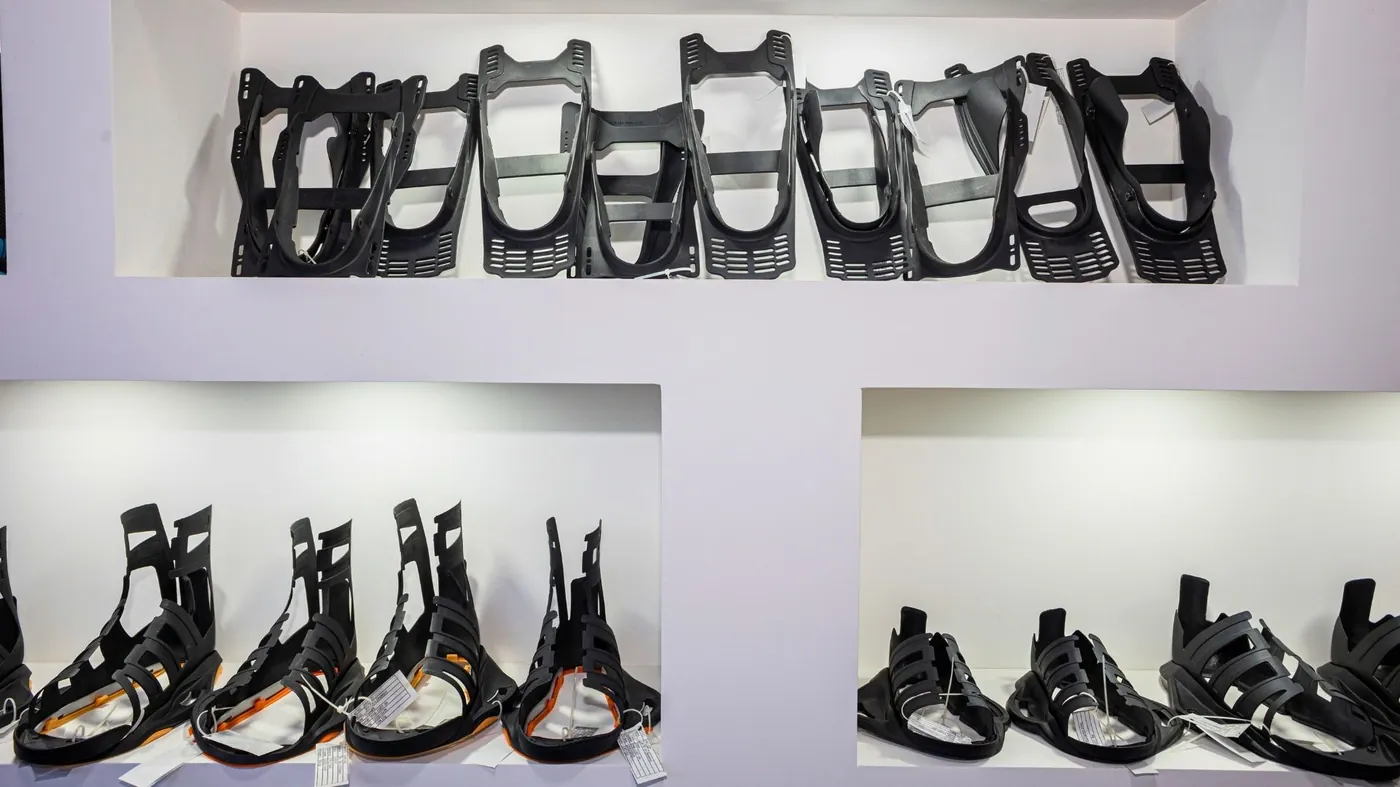
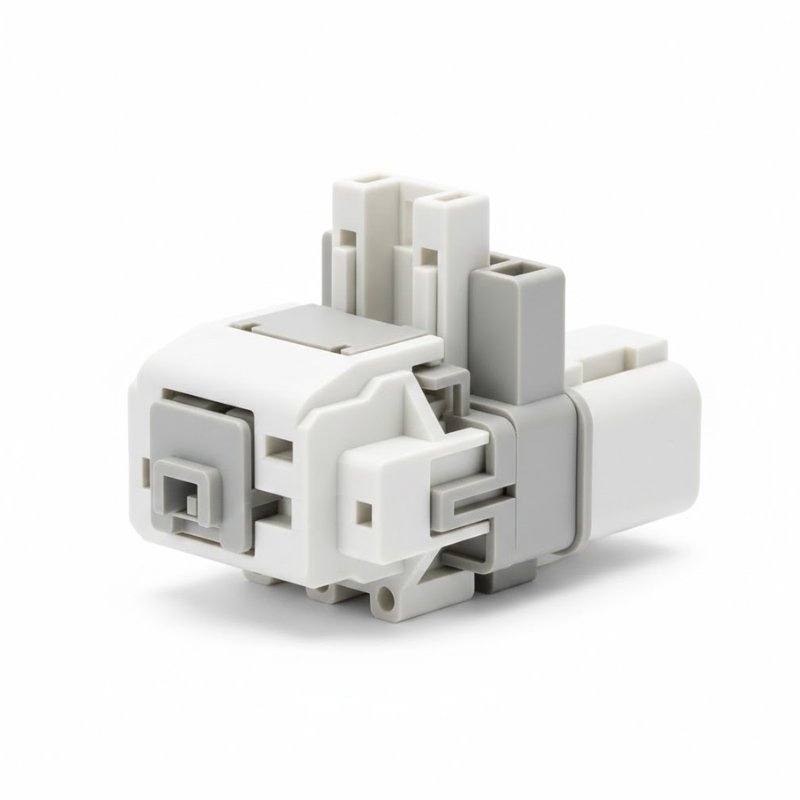
Typical non-critical components include medical device enclosures and housings that protect electronics and mechanisms, laboratory consumables and fluid-handling elements, diagnostic equipment components such as frames, brackets and interfaces, and mechanical sub-assemblies for point-of-care hardware. These parts still work in regulated environments. Clinicians handle them, they sit inside devices that must pass their own approvals, and a dimensional failure can still stop a production line or a product launch. Non-critical describes the risk class of the component, not a lower standard of care in making it.
- Enclosures and housings: they protect the device and the user experience — fit, finish and assembly all depend on them.
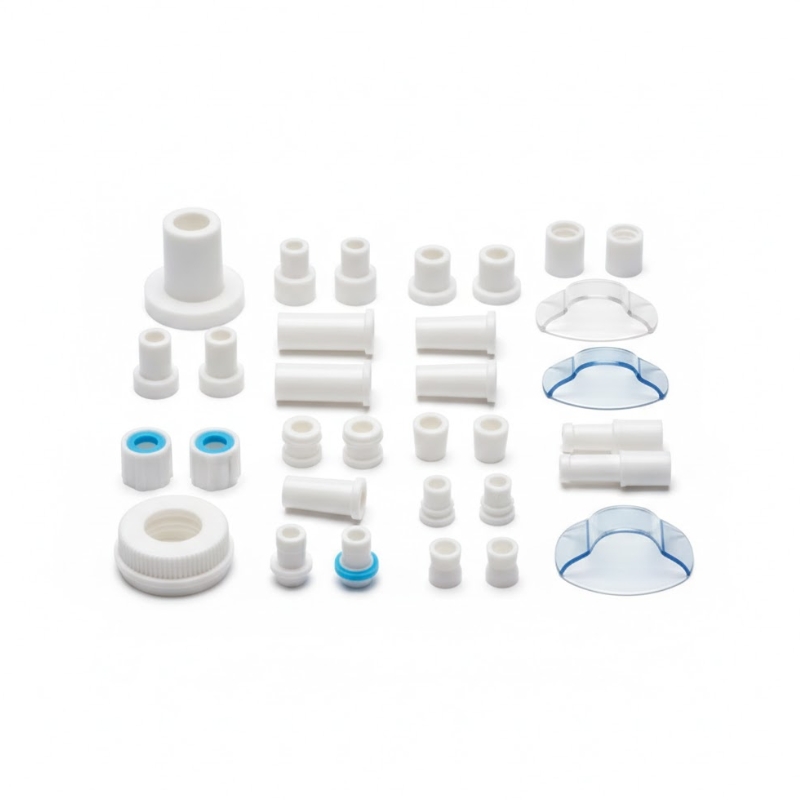
- Laboratory consumables: consistency matters more than complexity — every unit must behave like the last one.
- Diagnostic components: they must locate, align and protect sensitive electronics repeatably.
- Sub-assemblies: several molded parts must fit and function together, so tolerance control is shared across the set.
Haumann’s scope is deliberately limited to this non-critical, non-implantable work. You can see the full application list on the medical plastic components page. If your part is implantable or life-sustaining, you need a manufacturer set up for that class of work — and any supplier who blurs that line during a sales conversation is telling you something important about their controls.
How medical plastic components are made: the 7-step process
The medical injection molding process follows the same physics as any precision molding: melt, inject, cool, eject. What makes it medical is the discipline wrapped around that cycle — documented decisions, verified materials, validated tooling and inspection evidence. Here is the process step by step.
Step 1: Design review and DFM come first
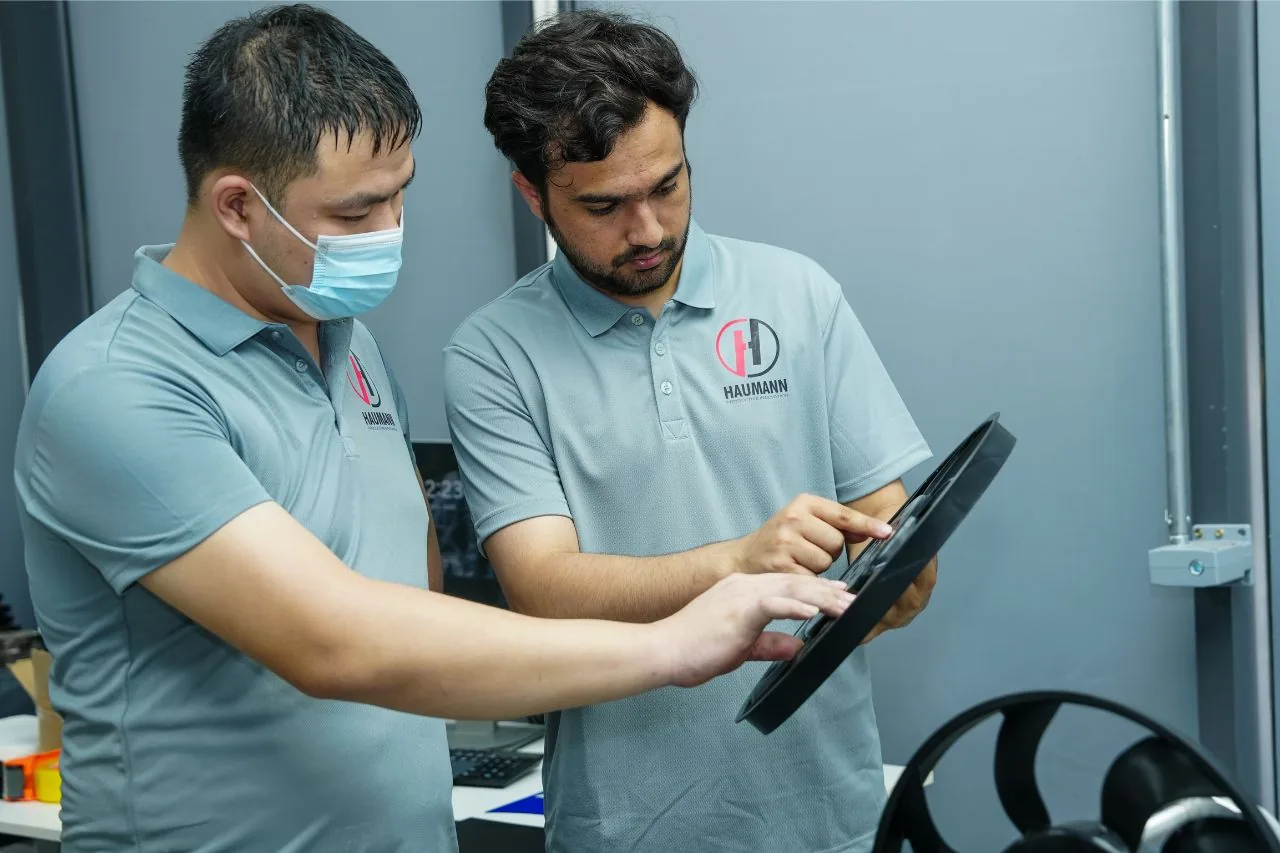
Every program starts with the part design, not the mold. In a design for manufacturability review, engineers check wall thickness and uniformity, draft angles for clean release, gate locations, parting lines, ribs, bosses and any undercuts that would need slides or lifters. They also review the tolerance scheme: which dimensions are truly critical, and which are tighter than the function requires and will only add tooling and inspection cost.
This is the cheapest moment to fix a problem. A wall that is too thick can sink. A gate in the wrong place can leave a weld line on a visible or stressed surface. A tolerance copied from a machined part can make a molded part unnecessarily hard to hold. A good DFM review gives you specific, drawable changes with reasons — not a vague promise that the part will be fine.
Haumann’s Houston team carries out DFM, tolerance and material reviews before tooling starts, as described in its guide to choosing a custom injection molding partner in the USA. For a general background on how the molding cycle itself works, Plastics Technology’s injection molding topic hub is a useful industry reference.
Step 2: Material selection with documentation
Next, the resin is selected against the job the part must do: strength, stiffness, impact resistance, clarity, chemical exposure, cleaning or sterilization method, and how the part contacts the user or the patient environment. Just as important is the paperwork. The exact commercial grade is specified, certificates are collected, and lot traceability is planned from the start — because ‘polycarbonate’ alone is not a specification, and swapping grades mid-program can invalidate the evidence behind a device file.
Biocompatibility needs careful wording. It is evaluated for the finished device, in its final, cleaned and sterilized form, under the ISO 10993 framework — not awarded to a raw material in isolation. A responsible manufacturer will tell you which grades carry supporting test data and will help you gather documentation, while leaving device-level biological evaluation to your regulatory pathway.
Step 3: Tooling — the mold decides the part
The mold is a precision steel tool machined to form the cavity and core of the part, with runners, gates, cooling channels and ejection built in. Tooling decisions — single-cavity or multi-cavity, gate style, cooling layout, steel grade and surface finish — decide cycle time, cosmetic quality, dimensional stability and unit cost for the life of the program. That is why tooling is quoted and reviewed as engineering, not bought as a commodity.
Prototype or bridge tooling can prove a design quickly at lower volume. Production tooling, built for long runs, costs more up front and pays it back in speed, consistency and lower piece price. Either way, the tool is sampled and measured before it is approved: first parts are inspected against the drawing, adjustments are made, and only then is the process released for production.
Step 4: The molding cycle, under process control
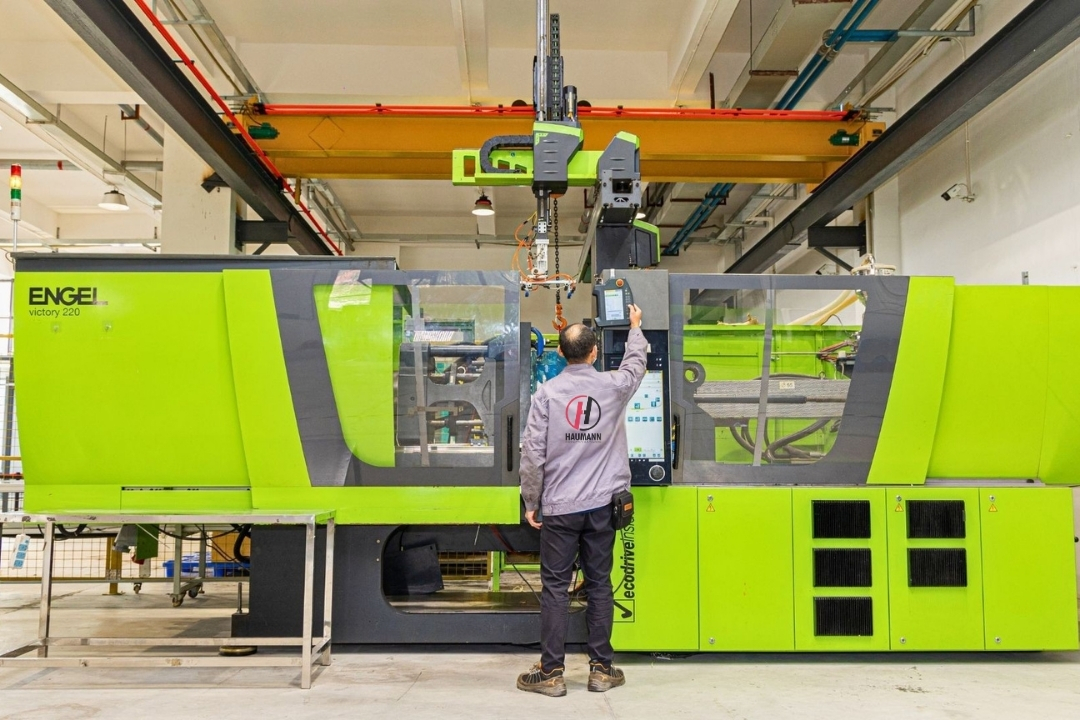
Production molding runs a repeating cycle. Plastic pellets are dried where the resin requires it, fed into a heated barrel, melted and mixed by a rotating screw, then injected under pressure into the closed mold. Pressure is held while the part packs out and begins to cool, cooling continues until the part is stable enough to eject, and ejector pins release it. The cycle then repeats — seconds to about a minute for most parts of this type, depending on size, wall thickness and material.
Repeatability comes from holding the process window, not from inspecting quality in afterwards. Melt and mold temperatures, injection speed and pressure, hold time and cooling time are set during validation and monitored in production. Automated cells and real-time monitoring help keep shot after shot consistent across long runs, which is exactly what high-volume laboratory consumables and enclosures demand.
The same controlled approach applies across Haumann’s plants. Its Houston injection molding team manages project ownership and communication, while production can scale across U.S. and Asia capacity under one quality standard.
Step 5: Inspection and quality control
Inspection starts with first-article checks on sampled parts and continues in production. Critical dimensions are measured against the drawing, cosmetic standards are agreed in advance, and functional fits — lids closing, clips engaging, mating parts aligning — are verified on real assemblies, not assumed. Where a dimension drifts, the response should be process correction and documented re-checking, not sorting good parts from bad at the end of the run.
Haumann operates under ISO 9001 and IATF 16949 certified quality systems, with the measurement, inspection and traceability discipline those systems require. To be precise about scope: Haumann does not claim ISO 13485 certification for this medical work, and this guide does not describe a cleanroom service. What it offers is controlled, documented molding for non-critical components, with Houston-based oversight — and buyers should always match a supplier’s certificates to the exact scope of their own program.
Step 6: Secondary operations, assembly and packaging
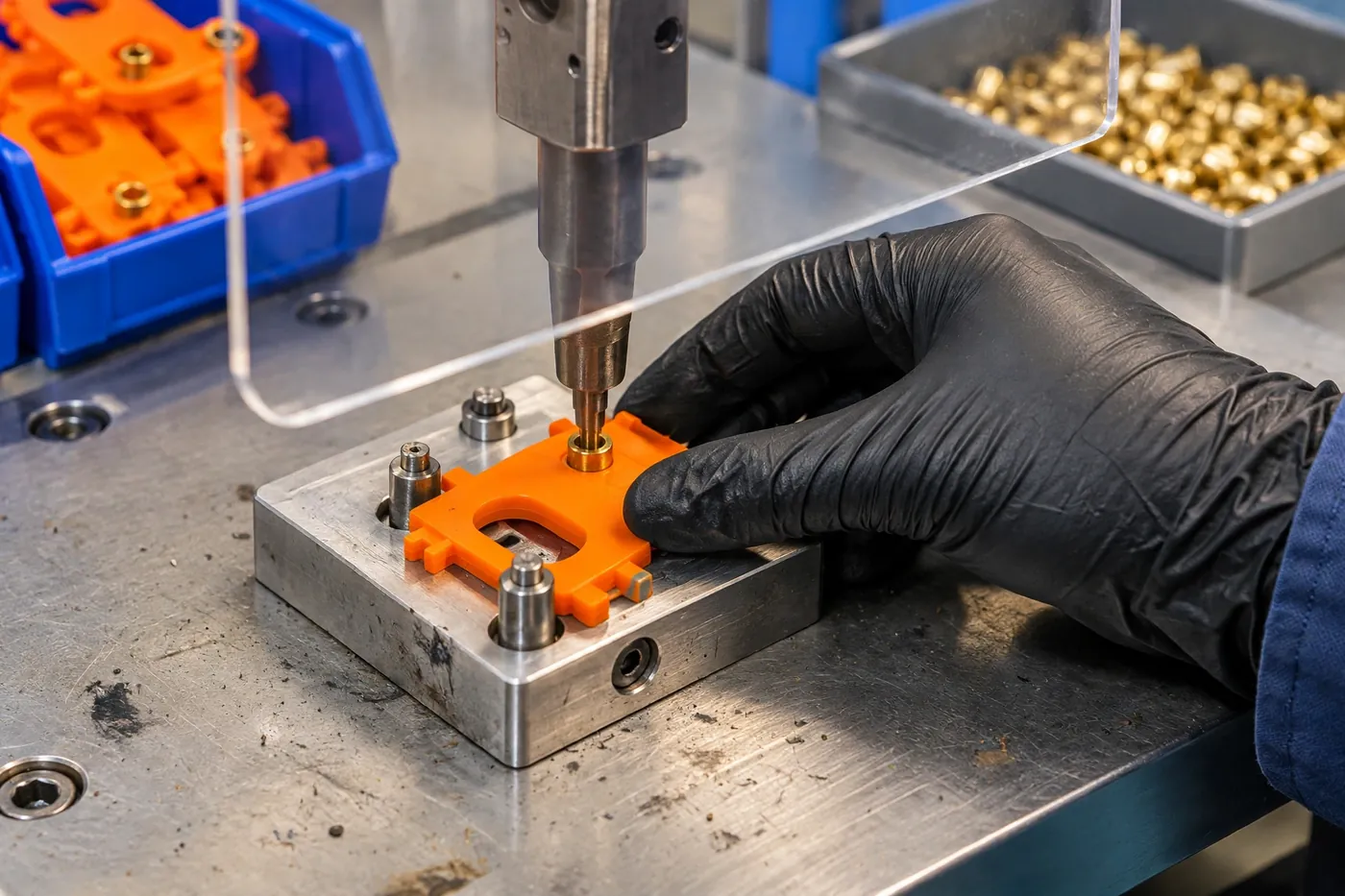
Many medical components are not finished when they leave the mold. Sub-assemblies may need inserts fitted, parts ultrasonically welded or heat staked, surfaces cleaned, or several molded pieces assembled into a working unit. Doing this under the same roof and the same quality system reduces handling damage, mixed lots and finger-pointing between suppliers.
Packaging is part of quality, too. Parts that will feed a device assembly line need protection from scratches, dust and deformation in transit, packed in agreed quantities with labels that preserve lot identity. If packaging is an afterthought, traceability and cosmetic quality are usually suffering as well.
Secondary joining deserves its own care: Haumann’s article on heat staking plastic degradation and how to prevent it shows the level of process detail involved when a molded boss becomes a structural joint.
Step 7: Traceability and release
The final step is the record. Material lots, production batches, inspection results and packing identity should connect, so that if a question arises months later — from your quality team, your customer or a regulator reviewing the device file — the history of the component can be reconstructed. Traceability is unglamorous, and it is one of the clearest differences between a job shop and a manufacturing partner.
Release should be a decision, not a default: parts ship because they met the agreed requirements and the paperwork proves it. That discipline is what lets a non-critical component sit confidently inside a regulated product.
Materials used for medical plastic components
There is no single best medical plastic. The right choice follows the application: what the part touches, how it is cleaned or sterilized, whether it must be transparent, how much load it carries, and what documentation your device file needs. The table below summarises materials commonly specified for non-critical components. It is a starting point for a DFM conversation, not a substitute for grade-level selection and testing on your finished device.
| Material | Common non-critical uses | Why it is chosen | Watch out for |
|---|---|---|---|
| Polycarbonate (PC) | Device housings, enclosures, clear covers | Strength, impact resistance and transparency | Chemical exposure and stress cracking must be checked |
| ABS | Enclosures, covers, internal frames | Tough, economical, good finish | Limited heat and chemical resistance versus PC |
| Polypropylene (PP) | Lab consumables, single-use parts, caps and containers | Chemical resistance, low cost, good for disposables | Lower stiffness; bonding and printing need planning |
| Polyethylene (PE / HDPE) | Containers, fluid-handling parts, packaging | Moisture and chemical resistance, flexibility | Lower strength and temperature limits |
| Polystyrene (PS) | Labware, trays, diagnostic consumables | Clarity, rigidity, low cost for single use | Brittle under impact; not for structural parts |
| PEEK and PEI (Ultem) | Demanding enclosures and high-temperature parts | High heat and chemical resistance, strength | High material and processing cost; use only where needed |
| Nylon (PA) | Brackets, clips, mechanical sub-assembly parts | Strength, wear resistance, toughness | Moisture absorption affects dimensions; drying is essential |
| TPU / TPE | Grips, seals, flexible and overmolded features | Flexibility, grip and sealing | Grade selection drives feel and durability |
For a deeper, independent overview of medical-grade selection — including biocompatibility, sterilization compatibility and traceability — see Fictiv’s medical device materials selection guide. The regulatory frame behind it is ISO 10993, listed in the FDA’s recognized consensus standards database for ISO 10993. Remember the key distinction: standards evaluate the finished device, so material data sheets support your file — they do not complete it.
Quality control: how defects are prevented, not sorted out
Most molding defects are process messages. Each one points to a cause in design, material preparation or machine settings — and each one should become rarer as a program matures, because the cause gets engineered out. These are the defects medical buyers most often ask about, and what prevents them.
| Defect | What you see | Typical cause | Prevention |
|---|---|---|---|
| Short shot | Part is incomplete or a feature is missing | Insufficient material, pressure or venting | Correct shot size, pressure and mold venting; verify at sampling |
| Flash | Thin excess plastic along the parting line | Worn tooling, low clamp force or excess pressure | Tool maintenance, correct clamp and process settings |
| Sink marks | Dips on the surface over thick sections | Uneven wall thickness or insufficient packing | Uniform walls in DFM; ribs instead of solid thickness; correct hold |
| Warping | Part twists or bows after ejection | Uneven cooling or shrinkage, poor gate placement | Balanced cooling, gate review and mold-flow thinking in DFM |
| Weld lines | Visible line where two melt fronts meet | Gate position, low melt or mold temperature | Gate relocation and temperature control; keep lines off stressed areas |
| Burn or discoloration | Dark marks or yellowing | Trapped air, overheating or degraded resin | Venting, temperature control and correct drying and handling |
| Contamination | Specks or foreign material in the part | Poor material handling or dirty equipment | Controlled handling, clean changeovers and lot discipline |
Notice the pattern: most prevention happens in Steps 1 to 4 — design, material, tooling and process setup. Inspection in Step 5 confirms that prevention worked. A supplier who talks mainly about final inspection is describing the most expensive and least reliable way to run your program.
What drives cost and lead time?
Four factors dominate the economics of a medical component. First, tooling: cavity count, complexity and steel choice set the up-front investment and the achievable cycle time. Second, material: engineering and high-temperature resins cost more to buy and to process than commodity grades, so specify performance you actually need. Third, volume: unit cost falls as volume rises, because tooling and setup are spread over more parts and multi-cavity tools run faster per part. Fourth, finishing: assembly, decoration, special packaging and extra documentation all add real work that should be quoted openly, not discovered later.
Lead time follows the same logic. DFM and quotation are fast when the design and requirements are complete. Tooling takes the longest single block, sampling and approval add a shorter block, and production then runs to an agreed schedule. The most common cause of delay is not factory speed — it is an incomplete brief. Drawings without tolerances, materials described by family instead of grade, and cosmetic standards left unstated all force extra loops.
The volume question deserves an honest conversation at the start. Haumann supports programs from prototype and bridge quantities through to high-volume production across its U.S. and Asia footprint, with project ownership in Houston — the model outlined on its homepage for custom injection molding services. The right structure depends on your launch risk, not on a supplier’s preferred minimum order.
How to choose a manufacturer for non-critical medical components
Use this checklist when you compare suppliers. The best partner will answer every point with evidence, not adjectives.
- Ask for a written DFM review with specific design changes and reasons before you commit to tooling.
- Confirm the exact resin grades proposed and the certificates and lot traceability that come with them.
- Ask how first-article approval works, which dimensions are measured, and what happens when a result is out of tolerance.
- Check that certificates match the scope: quality-system certification is valuable, but it is not a substitute for device-level regulatory evidence — and implant or cleanroom claims should be verifiable if they are made.
- Confirm who owns project communication, where they sit, and how changes are documented.
- Ask how assembly, packaging and labelling preserve lot identity through to delivery.
- Compare total program cost — tooling, unit price, finishing and freight — not unit price alone.
Haumann’s automotive plastic components program runs under IATF 16949 discipline for Tier 1 and Tier 2 suppliers. Medical buyers benefit from the same habits — documented control, measurement and traceability — applied to a non-critical scope, without paying for certifications their component does not need.
In short: medical plastic components are made well before the first production shot — in the design review, the material file and the tool. Choose the partner who proves control at those stages, and the molding itself becomes the most predictable part of your program. If you are preparing a non-critical enclosure, consumable or diagnostic component, send the design for an engineering-led DFM review and get a manufacturing plan you can put in front of your own quality team with confidence.
Start with a DFM review of your component
Share your part design for an engineering-led review covering manufacturability, material options, tooling strategy and quality planning for your non-critical medical component. Explore the scope first on Haumann’s medical injection molding services page, or contact the Houston team at globalsales@haumann-group.com or +1 (832) 497-0809.